




GettyImages-612658440

New data shows many cans of soup should carry red warning labels for their high salt content.

New analysis by Action on Salt & Sugar, based at Queen Mary University of London, has found salt levels in supermarket soups to e extremely high, despite their healthy reputation.

It found nearly a quarter of store-bought soups exceed maximum salt targets - with some tins delivering most of an adult’s maximum daily salt limit in one go. Certain brands were also found to contain more salt than two McDonald’s cheeseburgers.

Interestingly, it was the bigger brands who failed the hardest, with own label lines only contributing 6% of soups exceeded the target, wth 48% of named brands scoring too highly.

If dietary labels were required on soup, one in six would require a red warning.

As a result, today (6 February), campaign group Action on Salt & Sugar is calling for mandatory salt targets alongside stronger labelling legislation to provide more information for shoppers and better protect public health.

The group analysed 481 chilled and ambient soups sold across major UK retailers and found that nearly one in four (23%) still exceeded the Government’s voluntary maximum salt target for soup, which should have been met by the end of 2024.

High-salt examples included Daylesford Organic Minestrone Soup (1.0g/100g, 5.0g in a 500g packet) and Baxters Luxury Cullen Skink (0.95g/100g, 3.80g in a 400g tin).

Under front-of-pack labelling guidelines, one in six (16%) soups would receive a red warning for high salt content, while just 11 (2%) would qualify with a green label on front of pack.

GettyImages-2194928335

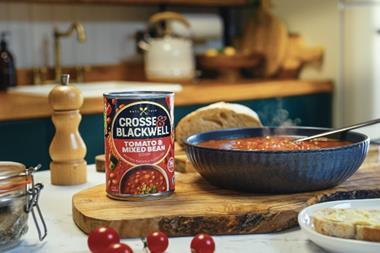
The analysis shows that among individual brands, a high proportion of products in this analysis exceeded the maximum target, including Mr Organic (88% of products assessed), Heinz (68%), Daylesford Organic (40%) and Crosse & Blackwell (27%).

Heinz’s market-leading soup, Cream of Tomato, contains 2.2g of salt in a 400g tin. When eaten with two slices of bread and butter, this ‘quick and healthy lunch’ can rise to 3.38g of salt - making up more than half of a person’s daily salt limit within a single lunchtime meal.

Action on Salt & Sugar is now urging ministers to move beyond voluntary approaches by introducing fiscal levers to drive reformulation, mandating front-of-pack labelling across all food and drink and strengthening healthy sales reporting and the nutrient profiling model so they apply consistently to all food and drink, ensuring high-salt products are no longer the default on shop shelves.

Sonia Pombo, head of impact and research at Action on Salt & Sugar, said: “Soup is often marketed as a healthy, everyday choice, but our findings show it can be a major source of hidden salt.

“The UK used to be a world leader on salt reduction, but progress has stalled. The Government must get back on the front foot with stronger incentives to drive reformulation and proper accountability so the healthier option becomes the default, not the exception.”


You can now secure your tickets to the Convenience Awards 2026!

Join us on 11 March in Liverpool to celebrate the entire convenience community.

See this year’s finalists and book your seat here.