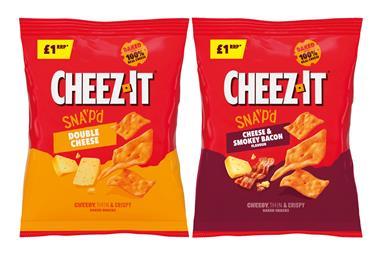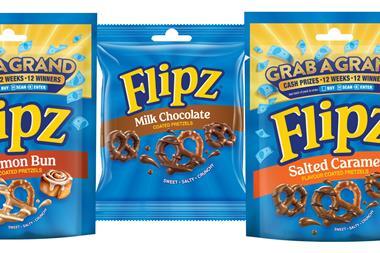












A clear price on-pack reassures shoppers, reduces hesitation at the shelf and keeps them in the category. Here’s how price-marked packs can turn that value cue into incremental snack sales
Price-marked packs (PMPs), a well-judged range and a fixture that’s simple to shop can help convenience retailers get more from savoury snacks. With shoppers still watching what they spend, a visible price has become one of the clearer ways to reassure them at the shelf.
The category gives retailers plenty to work with. Across 2025 and into 2026, 99% of consumers ate savoury snacks and 77% bought them through convenience [Kantar], in a category worth £895m a year [NIQ]. It has real scale: and it’s one where small changes in execution can move the numbers.
“It is not enough to simply stock snacks – retailers need to make the fixture easy to shop, easy to navigate and easy to choose from”
– Simon Foster, category management controller, impulse, PepsiCo
That matters more now that habits have shifted. “Shoppers are approaching the fixture differently,” says Simon Foster, category management controller impulse at PepsiCo. “They are buying 3.5% less per trip than two years ago [Kantar], which means retailers need to work harder to give shoppers confidence at the shelf. Visible value matters just as much as product availability. It is not enough to simply stock snacks – retailers need to make the fixture easy to shop, easy to navigate and easy to choose from.”
The format has grown into that role. PMPs now account for 62% of savoury snack sales [NIQ], with value share up to 70% across 2025 from 68% in 2024 [NIQ]. They are also a route to trial: 63% of new product packs are sold in PMP format, up from 59% the year before [NIQ], and sharing bags make up 73% of PMP new product sales [NIQ], demonstrating PMPs are supporting category growth as well as reinforcing shoppers’ perception of value.
Why value cues matter at shelf
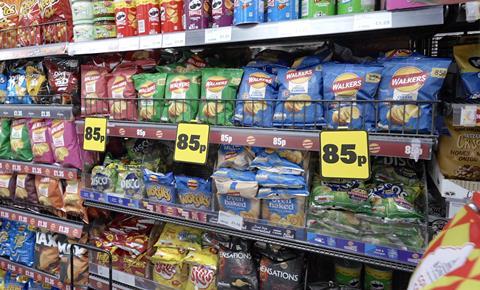
Convenience shoppers often decide in seconds, and an on-pack price can be enough to tip a product into the basket. It’s a sensitive threshold: almost 750,000 impulse shoppers risk dropping crisps altogether once packs pass the RRP £1 mark [Kantar], so a lower-priced entry point can be what keeps them in the category.
That thinking sits behind Walkers’ 85p RRP PMP, which gives retailers a lower opening price in a range shoppers already know. The idea is less about the price itself than about making value obvious at the point of purchase.
Putting the theory into practice
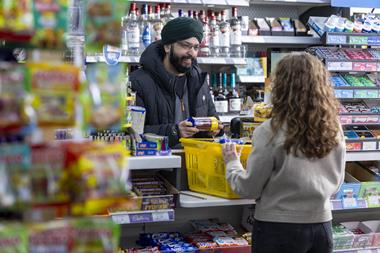
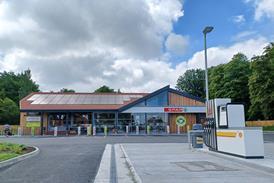
PepsiCo tested the approach over seven weeks in Avtar Sidhu’s (Sid) St John’s Budgens in Kenilworth: deliberately an affluent area, where shoppers aren’t the obvious audience for a value cue. The aim was to understand whether introducing a lower-priced PMP alongside the existing £1.49 RRP standard pack could drive incremental category growth.
To hear more about the trial and the results it delivered, watch the full video here:
The trial demonstrated strong volume growth across the core Walkers 85p RRP PMP flavours tested, with ready salted up 21%; cheese & onion up 26%; and salt & vinegar up 17%.
“Before the trial, we were already happy with how the fixture was ranged, but it was a valuable opportunity to try something different,” says Sid. “Seeing the volume growth reminded us that making changes can have a positive impact and that keeping the fixture up to date really matters. It showed us that a clear value cue can encourage shoppers into the category.”
The trial explored a common category question: if a retailer is already selling the equivalent standard pack at a higher price, can introducing a clearly priced PMP attract more shoppers into the fixture and drive sales?
While every store is different, the findings demonstrate how relatively small changes can unlock additional sales without fundamentally changing the range. They also reinforce a broader message from PepsiCo’s Max Your Snacks report: growing the category is often about making existing products easier to shop, rather than adding more SKUs.
It starts with the basics
That’s the thread running through PepsiCo’s Max Your Snacks report, which sets out five fundamentals – space, range, layout, points of interruption, and campaign or new product visibility:
- Prioritise the main fixture. This is where most sales are generated, so it should be easy to shop and simple to navigate.
- Keep core favourites visible. Use trusted brands and familiar flavours to act as a beacon for the category.
- Use PMPs to make value obvious. Clear pricing helps reduce hesitation and builds confidence at the shelf.
- Make the most of secondary sitings. Position savoury snacks alongside drinks, food-to-go, front of store and beer, wine and spirits to capture impulse purchases.
- Treat the fixture as a sales tool. Strong blocking, point-of-sale materials and clear merchandising help the category work harder.
The Sid trial demonstrates that growing savoury snacks sales does not always require major change. Sometimes, giving shoppers a clearer value cue at the right moment is enough to increase confidence, encourage purchase and unlock incremental category growth.
For more advice on how to maximise savoury snacks in convenience, retailers can visit: https://www.shopt.digital/en-gb/#download