













While 2026 may well have plenty on the horizon for retailers to look forward to, or just prepare for, there are still numerous challenges facing them that could prove trickier to deal with – and which could in fact break some.
Pressures from rising staff costs, business rates, legislative changes and the ongoing burden of retail crime will all play a part in the fortunes of convenience retail in 2026.
So how will stores cope? Are we at a tipping point, as some suggest, or are there ways to get around the increasingly long list of issues and threats to businesses?
Convenience Store spoke to three longstanding retailers about the potential flashpoints they see on the horizon this year, and asked how they expect to deal with them.

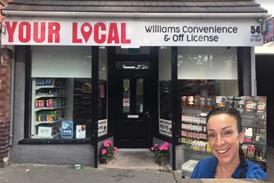
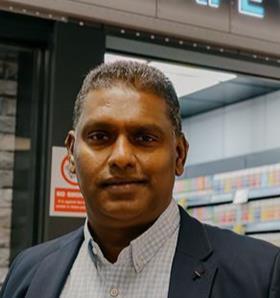
Daniall Nadeem (left) of Spar Belshill near Motherwell, believes the struggle in 2026 will largely stem from lower margins. “There’s an overall loss in margin through our suppliers. It’s inflation rates, and the cost of goods themselves.
“Look at the price of a Cadbury’s Buttons pack - going back even just three years - a customer could have bought two for the same price as today. The net disposable income of our customers has dropped too, so we’re going to feel that.
“So it’s just the kind of general cost of goods that’s first and foremost the scary part, and then the second part is obviously the cost of doing actual business.”
Naturally, this will impact on the bottom line, as Daniall explains: “Everything is going to hit your bottom line. Your staff costs, your banking charges - and theft rates are through the roof at the minute as well, so you’re pushing the losses there too.
“Over the years we’ve changed and adapted and kind of moulded the business into being fit for the future.”
One glimmer of hope, Daniall says, is his store’s ability to adapt in difficult times. “Over the years, we’ve changed and adapted and kind of moulded the business into being fit for the future.
“We’ve done it in terms of automating as many tasks as possible - electronic shelf edge labels, automatic ordering to reduce the amount of time our team have to spend doing everything that was involving a lot of man hours. We’ve basically tried to systemise as much as we can - so something that would take probably three or four hours to do we can run it down into a 15-minute process.”
Meanwhile, the story is all the more dramatic for Seelan Thambirajah (right), a Premier retailer with 20 stores in and around Sheffield. He thinks things have reached a tipping point that may well force him to sell his entire estate.
“Across all of our 20 stores we’re looking at about being £180,000 worse off this year. It’s affected by the rate change and then the wages, but I want to pay those to staff because at the end of the day, they’ve got to survive. Otherwise they can’t work.”
Seelan says he feels, ultimately, unsupported. “I just don’t think the local council or the Government are working for us for as independents anymore.
“We really noticed it after the budget. In the past, maybe five to ten years ago, we enjoyed being convenience stores or local community stores and supporting the environment - but now it’s just painful.
“Day by day we’re just losing our trust and it’s really hard. I have 20 stores and 180 staff across the board. We’re paying everybody on time, paying VAT, taxes and everything. But what’s the local government and local council doing to support us?”
As with many retailers, shoplifting is also impacting Seelan’s chain heavily, but he says again, he has had no support for this at all. “We report it all, but so far I haven’t received even one single communication from the local police.”
Comparing this Christmas to the last one, Seelan is even less optimistic. “All the sales are gone. Overall we’re 10% down, just for the like-for-like sales.”
“If I can’t afford to survive I’ll sell to whoever’s interested…”
Such figures have lead Seelan to a drastic consideration, he says. “I’m hoping to see a few estate agents. If I can’t afford to survive I’ll sell to whoever’s interested - they can take over my businesses. We’re happy to get rid of it.
“We have heavy debts now, but who’s going to support us? Nobody. If you look at it, everybody’s going to try to tweak their business models. The problem is we can’t go back and borrow the money from the bank because that’s going to end up in unnecessary debts again.”
On a personal level, Seelan believes one of the more subtle impacts of a tougher year will be on the local community itself. “The saddest thing is all our stores are local community stores and unfortunately I have to let them down. Booker are doing whatever they can, but everybody has a limit. They’re really a fantastic supplier and they’re supporting wherever they can.
“It’s breaking point. We’ve achieved a lot and I’ve worked so hard for the last 20 or 25 years. But it’s impacting everyone - local pubs, they can’t survive either. I don’t have the solution - local government and our local council are basically committing daylight robbery nowadays…”
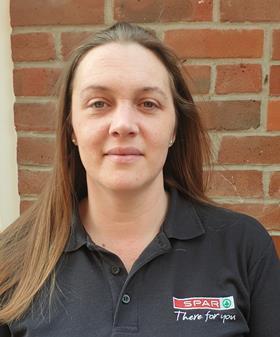
Finally, one proactive Spar retailer in Wiltshire, Susan Connolly (left), acknowledges the challenges mentioned, but is hoping a stronghold on technology in her store can help – and in particular, artificial intelligence.
“AI is the best tool in the world. I put in my sales data for my vape offering and asked it to compare this to the wider market. I ask it what my range is like, and it will come back and give you an astronomical answer. What I’ve realised is I’ve got completely the right range. The only thing different is pricing, with people going online.”
This key information has given Susan an edge, she believes. “I’m looking at moving things so I can give the same offers as online to get the sales back up. In that way, AI is huge, so I’ll be using that more this year.”
Susan says AI can also help when it comes to the perhaps more mundane elements of retail. “I’m going to use it for all my planograms now. Traditionally, I’ve printed off Spar’s planograms and although they’re good, when you dive into the nitty gritty, it’s not necessarily the best range for your store.
“It’s about using AI to find that really good range. When you go into AI it will tell you what’s selling nationally. So between a mix of AI and lots of hardware for me, I’ll be reading all my planograms again.
Evolution then, would seem to be the key for the future for Susan and her store. “With the information I’ve got from suppliers with AI and what they say, coupled with my own sales data as a way to increase sales, AI is the way forward.”
Susan says she uses ChatGPT, although she pays for the professional version, which she adds is well worth the investment. “There’s a research element to it. Rather than just asking a question, there’s a whole research side that does it all for you.
“I’ve also done some courses to teach myself how to use it and to give it the right prompt. I’ve even been creating POS for social media images - it sounds pretty geeky, I’m a geek now - so I’ll be using it for my social media posts.”
Susan says despite social media being another project for 2026, she remains sceptical of certain platforms. “With TikTok, I think that’s a lot of time and effort for not a great return. While it’s great having a video that a million people have seen, how many of those people are coming in to shop?
“It’s about being at the forefront. AI is going to happen, so let’s embrace it and use it…”
“It’s just about being at the forefront. It’s going to happen, so let’s embrace it and use it how we need it for now. It’s about working smarter, not harder.”










No comments yet