












1. What is the health of the category?
2. Shoppers want functional products
3. Category shift is driven by younger shoppers
4. Flavoured drinks are driving growth
5. Is decaf the next growth area for iced coffee?
1. What is the health of the category?
Once a small part of a store’s soft drinks offering, there is now an expectation from consumers that there are plenty of dairy and iced coffee drinks available to them. Kate Abbotson - Senior External Communications Manager at Coca-Cola Europacific Partners, explains how important the sector is to soft drinks. “The RTD coffee segment is forecast to be the highest-growth category in soft drinks with increasing relevance alongside dairy-based drinks as consumers seek convenient, chilled coffee options.
“According to long-term projections, the category is expected to double in size by 2030, reaching an estimated £670m. Originally a niche category when it launched in 2010, RTD coffee is now firmly established in the mainstream, with its growth primarily driven by younger consumers who have adopted it as a year-round, all-occasion beverage.”
Abbotson outlines how the Costa Coffee RTD range has been designed to meet “a broad spectrum of growing consumer need-states”. “Double Shot variants deliver a high-intensity caffeine boost for busy mornings, while Latte and Caramel Latte offer smoother, more accessible coffee experiences. Meanwhile, the Frappé range provides a more indulgent, lower-caffeine option for shoppers looking for a treat rather than a functional energy boost.
“The latest addition is Costa Coffee McVitie’s Jaffa Cake Frappé – the brand’s first co-branded RTD launch in Great Britain. Inspired by the nation’s long-standing love of chocolate and orange, the limited-edition variant delivers a refreshingly indulgent twist on iced coffee, making it an ideal afternoon pick-me-up or on-the-go treat. Joining the line-up is Creamy Tiramisu Frappé, a low-caffeine drink inspired by the classic Italian dessert. With a smooth, velvety texture and rich dessert-style flavour, it’s designed for shoppers seeking a more indulgent coffee occasion.”
Grant Yates, Sales Director at Yoplait, focuses on the dairy side of matters. “The dairy drinks category continues to gain momentum, worth over £415m in value, growing at 8.8%, with many brands leaning into trends such as high protein and meal replacements. However, alongside this innovation, shoppers are increasingly seeking products with simple, clean ingredients and no unnecessary preservatives.”
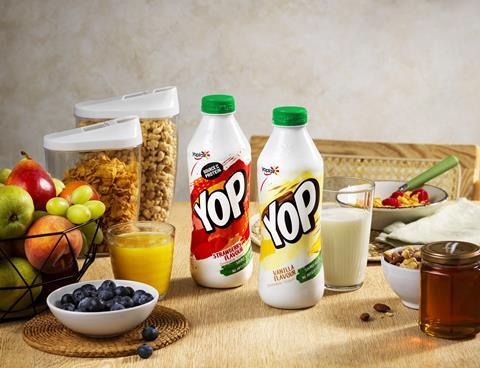
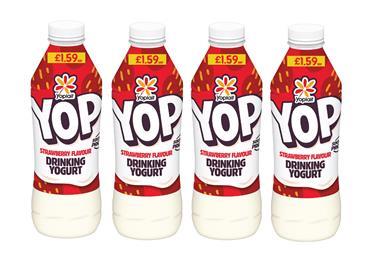
Yates explains that this didn’t happen in isolation. “Marketing investment has supported this momentum. The £600,000 ‘Put a Yop to it’ relaunch is Yop’s first major redesign in over 20 years. It includes nationwide sampling of 60,000 bottles to drive trial and strengthen standout among teenage and young adult shoppers.
“Format and flavour continue to underpin growth. The 500ml format is the best-selling pack, demonstrating continued demand for convenient, affordable formats that work both on-the-go and at home. Strawberry remains the top-performing flavour, with 500g growing by +8.4% value sales growth year on year and the 825g growing at +244% year on year.
“Within kids’ dairy drinks, Petits Filous Mess Free Strawberry Drink remains the number one kids’ yoghurt drink, worth £600k, highlighting continued demand for convenient, nutritious options for families.”
Back to top
2. Shoppers want functional products
The demand for functional lines has hit numerous FMCG categories and the dairy, RTD and iced coffee area isn’t immune to this trend.
Matthew Thomas, Director of Category & Commercial Strategy UK&I for Danone explains how functional is now expected. “Dairy drinks, RTD and iced coffee are all benefiting from consumers’ growing appetite for products that combine great taste, convenience and clear nutritional benefits.
“Within dairy, we know that drinkable and functional formats are performing particularly well, fitting naturally into busy lifestyles. We’re seeing interest in gut health continue to grow, with the category now worth £367m and growing 12% year-on-year. Kefir is a key driver behind this - Activia Strawberry Kefir alone recruited 1.3m shoppers over the last year. At the same time, demand is increasing for natural ingredients. Innovations such as Actimel Simple reflect that shift, offering immune support with a shorter ingredient list.”
He adds that plant-based alternatives are also providing an opportunity for the category.
“We’re seeing many of the same trends play out in plant-based drinks, where choice, convenience and premium café-style experiences continue to shape demand. Oat, almond and soya give consumers more ways to personalise drinks around their preferences, while flavour innovation is bringing inspiration and excitement into the category. Matcha is a good example, with its presence in tea and ready-to-drink products more than doubling from 5% in 2023 to 12% in the first 10 months of 2025 alone. That growing appetite for café-inspired flavours is why we launched Alpro Matcha Coconut. We also expanded our portfolio this year with Alpro Meal to Go, a nutritiously balanced meal replacement drink for consumers on-the-go, offering 20g of protein and 25 vitamins and minerals.”
“For retailers, the opportunity lies in making sure shoppers can easily find the formats, flavours and key benefits they’re looking for wherever they are shopping, from the chilled fixture and convenience stores to cafés, online and away from home. The products that stand out will be those that combine great taste with a clear benefit, helping shoppers quickly find the option that best suits their needs and occasions.”
Grant Yates, Sales Director at Yoplait, agrees that consumers expect healthy drinks in this space. “Shoppers are prioritising products that support broader wellness goals without compromising on taste or texture. It’s no longer simply about fewer ingredients, it’s about better ingredients, clearer labels and tangible functional benefits.
“Protein and gut health remain key drivers, with sales in these segments growing +21.8% and +7.7 % respectively. Innovation across the category reflects this shift. Some brands are leaning into high-protein and meal-replacement style propositions, while others are focusing on clean-label recipes with no added preservatives. For families, fortification is increasingly important, particularly around nutrients such as calcium and vitamin D, as parents seek everyday ways to support children’s development.
“Looking ahead, health and wellness benefits particularly around protein, gut health and essential nutrients will remain central to category growth.”
Jon Walsh, co-founder and CEO of Bio&Me, adds that kefir is “one of the standout growth areas”. “Total kefir sales are up +33% year-on-year, while the convenience channel is also showing strong growth, where sales have increased by +27.3%. And when it comes to dairy drinks specifically, total sales are up +29.6%, while convenience is showing growth of 21.8%. These figures prove that consumers are actively seeking out fermented, functional products as part of their everyday shopping missions.
“Overall, consumers are asking for more from their beverages. Whether it’s supporting gut health, protein intake or overall wellbeing, shoppers are looking for products with a clear purpose. At the same time, transparency and credibility are becoming increasingly important.
“Convenience retailers don’t have the luxury of unlimited shelf space, so every SKU needs to earn its place. Rather than trying to replicate supermarket ranges, retailers should focus on credible brands that offer something genuinely different and meet growing consumer needs.”
Back to top
3. Category shift is driven by younger shoppers
The best way to ensure the long-term future of a category is to have a steady stream of younger consumers that are engaged. David Randall, CEO of Spacegoods, says these younger shoppers are doing more than engaging but dictating the trends. “Younger consumers are reshaping the category. They want café-style convenience but also drinks that feel better for them. They are searching for ‘clean’ functional and additive based drinks that provide them a health benefit. For example, in coffee the new battleground is becoming lower crash energy, plant-based options, and added functional benefits.
“We’re seeing that chilled, single-serve RTD formats tend to win because they fit grab-and-go missions. Clear flavour, convenience, and a strong point of difference (especially functional or premium positioning) are key drivers.”
Bob Mulder, managing director at Friesland Campina, says younger shoppers drive the treat occasion. ”Sales are heavily dictated by key consumer occasions and shopping missions. The treating occasion is highly important, accounting for 10.4% of all store missions, particularly among younger demographics. On-the-go immediate consumption is the most dominant mission, as 65% of all soft drinks are bought for instant use, making smaller 300ml and 400ml formats essential for front-of-store soft drink chillers. Finally, pick-me-up occasions represent a major driver, with consumers purchasing drinks to enjoy in between meals or while relaxing at home.”
Back to top
4. Flavoured drinks are driving growth
While dairy drinks continue to gain momentum in the convenience channel, flavoured milk is standing out as a key sub-category. According to Circana figures, convenience sales of flavoured milk are up 13.3% to £388.2m, now making up 44% of the total £877.4m category.
Chocolate-flavoured milk remains a shopper favourite, with sales up 7.8% to £167.7m and more than 117.2m drinks sold each year. Combining function and flavour - protein is a fast-growing trend within flavoured milk, with sales of protein milk drinks up 28.9% to £103.7 million. 1 in 10 flavoured milk drinks sold is a protein milk drink.
Kerry Cavanaugh, general manager at Mars Drinks & Treats, comments: “Convenience shoppers are looking for great-tasting chilled options, with demand for functional benefits like higher protein showing no signs of slowing.
“Our Hi Protein milk drinks blend popular brands and flavours with additional protein, a combination which helps to draw attention to the chiller. As HFSS-compliant products, they also support retailers in offering great-tasting soft drink options that align with current healthier choice guidelines.”
Mulder adds that both traditional and premium flavours are doing well.
”Several key SKUs deliver exceptionally strong sales in the convenience sector. Traditional options lead the category, with YAZOO Chocolate and Strawberry 400ml acting as vital category signposts that each boast a market value of over £34m. Premium dessert-inspired lines are also thriving, as demonstrated by the YAZOO Inspirations range in Birthday Cake and Caramel Blondie, which sells at an impressive rate of 1 bottle every 10 seconds. In the iced coffee segment, Barista Caffe Latte and Caramel Latte 250ml are key drivers behind the brand’s 28% year-on-year growth.”
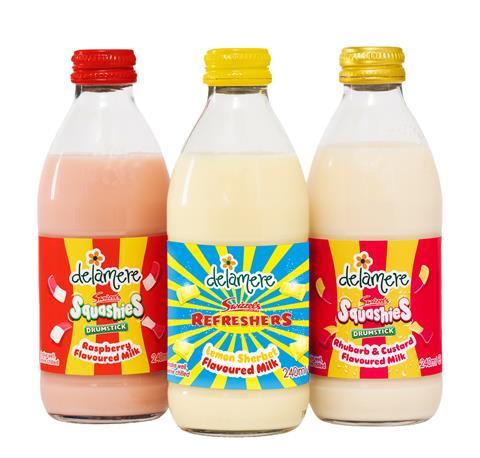
Going for a more retro vibe, Delamere has launched a brand-new range of flavoured milks, inspired by some of British sweet maker Swizzels’ most iconic creations.
The Delamere & Swizzels flavoured milk range features three distinct, nostalgic flavours in a convenient 240ml glass bottle format: Squashies Drumstick Raspberry & Milk, Squashies Rhubarb & Custard and Lemon Refreshers (rrp: £1.17)
On the coffee side, premium flavours are the name of the game as Lavazza is introducing a new Ready-to-Drink range, developed in partnership with Müller. The range features four dairy-based creations, available in a 220ml format, inspired by Italian coffee recipes: a rich Cappuccino, smooth Latte Macchiato, velvety Caramel Latte flavour and, finally, indulgent Cappuccino Tiramisù flavour, whose taste is inspired by the iconic Italian dessert. Each has been carefully crafted to offer a refreshing yet indulgent moment of pause for every consumer.
Back to top
5. Is decaf the next growth area for iced coffee?
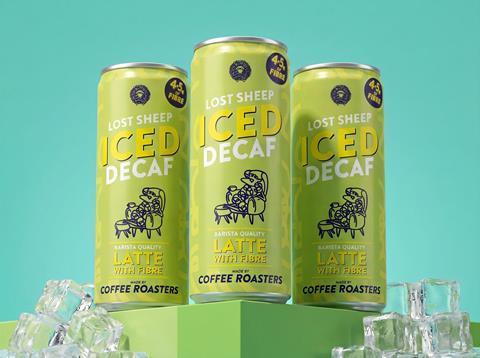
Some of us may not see the point of decaf coffee but there is enough demand for it to make one of the big opportunity areas in the category. Founder of Lost Sheep Coffee, Stuart Wilson, believes it’s the way forward. “With decaf set to be the next big growth opportunity for iced coffee, Lost Sheep Coffee is challenging the perception that decaf means compromise, with the launch of a new Sugar Cane Iced Decaf Latte with Fibre that taps into three of the 2026’s biggest drinks trends - decaf, functionality and fibre.
“The new addition to the brand’s RTD iced coffee range combines speciality-grade decaf coffee with skimmed milk and chicory root fibre, to create a barista-quality iced latte that delivers quality, flavour and functionality. It’s true barista-quality - with depth, chocolate notes and a big mouth feel - while also tapping into growing demand for gut-friendly fibre and functionality.
“What makes this different is that it’s real craft coffee. We use fully traceable, speciality-grade beans decaffeinated through a sugar cane process that gently removes caffeine while preserving the coffee’s natural flavour, rather than relying on harsh conventional decaf methods or lower-grade coffee.”






No comments yet