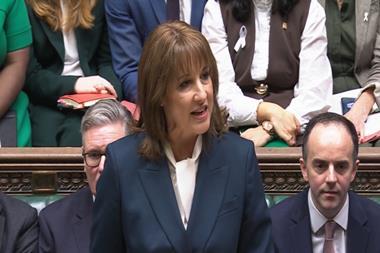
The Chancellor has delivered Labour’s first Autumn Statement, unveiling a series of key changes that will be felt by the convenience sector.
Let’s see how industry trade bodies have reacted.
Association of Convenience Stores
The Association of Convenience Stores (ACS) has warned that the new Retail, Hospitality and Leisure business rates multiplier in today’s Budget does not go far enough to provide meaningful support for local shops.
The new business rates multiplier will be set just 5p lower than the small business and regular multipliers, which fails to offset the removal of the remaining 40% relief on business rates that was first introduced during the pandemic, said the trade body.
“Changes to the business rates system provide nowhere near enough support and are a major disappointment. Small shops will see their rates bills increase in April, and many will see further increases as a result of the revaluation,” said James Lowman, chief executive of the ACS.
The ACS has welcomed new powers to tackle the illicit trade in vapes, which include fines of up to £10,000 and new digital duty stamps to make it easier to spot fakes.
Lowman added: “We welcome targeted action to disrupt the illicit trade that undermines responsible retailers across the country, but new powers and penalties will only be effective if Trading Standards officers have the additional resources they need to enforce locally.”
Federation of Independent Retailers
The Federation of Independent Retailers (The Fed) welcomed the Chancellor’s announcement of a crackdown on illicit traders but is concerned that continuing high costs, including increases in the minimum wage, will harm small businesses.
“I wrote to the Chancellor personally regarding this issue immediately before the Budget, so it is pleasing to see action being promised.
“However, the introduction of licenses to sell tobacco products and vapes will place a further burden on honest shopkeepers. We want to see any scheme implemented flexibly so it doesn’t just cause more red tape for responsible retailers like our members.”
Patel said it was disappointing that the increase in the minimum wage is above inflation. He added: “We called for any increases to be kept in line with inflation. Unfortunately, higher wage bills will lead to more staff having their hours cut or even losing their jobs, with retailers having to take on even more hours themselves.”
On the subject of business rates, the Fed is concerned that although the government is providing reduced small business rates multipliers and additional transitional rates relief that could benefit its members, there is continued uncertainty for small shops, with a revaluation for businesses due in April 2026.
British Retail Consortium
Helen Dickinson, chief executive at the British Retail Consortium (BRC), said it was a “mixed bag Budget” that offered relief for many shops, but brought in new costs for others.
”Retailers face a delicate balancing act as they strive to invest, hire, and keep prices affordable. The announced permanent reduction in retail business rates is an important step to reduce the industry’s burden from this broken tax. Yet the decision to include larger retail premises in the new surtax does little to support retail investment and job creation.
”The welcome plan to scrap the damaging de minimis loophole was weakened by a 2029 deadline. And while increases in the National Living Wage were in line with expectations, the rise to the minimum wage for under-21s could limit employment opportunities. All in all, we will see winners and losers across retail and the impact for consumers will unfold in the coming months, but this Budget does not go far enough to mitigate the inflationary pressures already bearing down on the industry.”
Retail Trust
Industry charity Retail Trust said it remains to be seen whether today’s Budget will do enough to reassure the UK retail industry days ahead of the busiest shopping period of the year and amidst the ongoing uncertainty currently facing the sector from all sides.
Chris Brook-Carter, chief executive of the Retail Trust: “Retail businesses are still reeling from the huge economic pressures placed on them in the last Budget and have been dealing with a fall in sales in October due to dampened consumer confidence as shoppers awaited today’s Budget.
The charity’s latest research found 54% of retail workers are at risk of leaving their jobs and 44% are working while unwell due to the insecurity they and their employers face. Meanwhile, 77% have told us they have experienced physical or verbal abuse this year, with 43% now coming under attack every week.
“Retail is the largest employer outside of the public sector, is a gateway to work for many people, and binds our communities and high streets together. This is something we forget at our peril, and our concern is that job insecurity among employees could rise and that shoppers’ tensions will remain heightened over the coming months.
”The industry needs more support from the Government but it’s also on all of us to support staff and help bring respect back to the high street this Christmas when we’re out shopping, starting with acts as simple but as important as a greeting, a thank you and a smile.”
Institute of Grocery Distribution
A Budget reaction from James Walton, chief economist at grocery insight charity Institute of Grocery Distribution (IGD), covered what it means for food inflation, impact on shopper behaviour and food & drink businesses.
“This has been a tough Budget for shoppers, with government needing to raise significant sums of money, taking taxation to record levels. IGD expects food inflation to persist into 2027, with government policy contributing about a third of this pressure.
”Food inflation will run ahead of overall inflation, making food relatively more expensive. Therefore, food shoppers will remain extremely cautious and reluctant to spend and the operating environment for food businesses will remain extremely difficult. The next few years will be characterised by weak volume growth and tight profits across retail and away from home.
“It’s clear there’s no immediate relief on the horizon for consumers or businesses. The increased taxation will slow volume growth which means less investment for the future resilience of the food system. There are opportunities for growth out there and targeted policy changes could unlock this, especially in horticulture and poultry. These changes could release £5bn of investment and create 60,000 jobs, and that means genuine economic progress.
”Our recent Viewpoint report, Driving Growth Through a Thriving Food System, sets out how the food industry can be the growth engine the UK urgently needs.”


No comments yet