








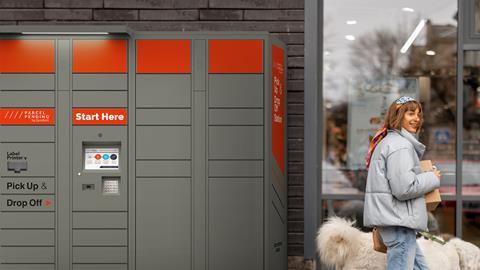

From Barista-style coffee to lunchtime meal deals and support for local causes, convenience stores have evolved to meet the needs of modern communities. Adding value for shoppers and retailers alike, parcel lockers have the potential to be central to that proposition.
In an era of smartphones, social media and ecommerce, it can be easy to forget the critical role that local stores play as community hubs.
According to the Association of Convenience Stores’ (ACS) Community Barometer 2025, local stores are seen by UK shoppers as both the most essential to, and most impactful on, their community. In shoppers’ eyes they’re second only to pharmacies and the Post Office.
A third (32%) of shoppers said they know their local store owners well. Meanwhile, 36% would have to travel several miles farther to buy essentials if the store wasn’t there and 39% even felt their local c-store helped reduce loneliness.
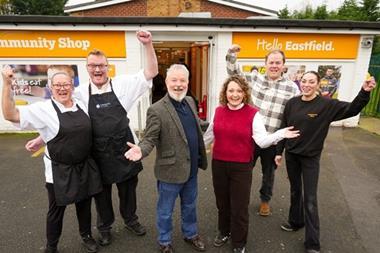
Today’s stores meet their community’s needs by going above and beyond selling a pint of milk and a pack of toilet roll. They’re pinning up noticeboards to highlight nearby events, donating to local causes and even offering stores as meeting points for neighbourhood groups.
And increasingly, they’re also steadily adding to a roster of services that meet the needs of more modern communities, from hot food to even hotter Barista-style coffee machines, and – more recently – catering to soaring demand for an easy and accessible way to send and receive parcels too.
Redefining value for the community
“The breadth of services that convenience stores now offer in a bid to cater to local communities is constantly evolving,” says Lee Graham, sales director Europe (Lockers) at Quadient. “They’re always getting smarter about what they’re offering and how.”
In the last few months alone, Lincolnshire Co-op has expanded its Love Local range to provide 45 hyper-local suppliers across coffee, confectionery and craft drinks. Nationally, the Co-op has rolled out a new micro-chain format that cooks and delivers fresh pizzas from on-site during evening hours, and new convenience chain Storrd is set to feature breakfast bar-style window seating, its own loyalty scheme and ‘chef-prepared gourmet meals’ when it opens its debut store in London.
Providing these services and added extras to communities can be a real point of difference for smaller retailers – driving additional footfall and incremental spend. As Graham points out: “If you stand still as a convenience store and don’t invest in these value-added services for customers, you’ll definitely get left behind. It’s about identifying the additional services you can offer that meet shoppers’ changing set of needs.”
Plus, along with coffee machines and lunchtime meal deals, high on that list for many stores is now parcel drop-off and collection.
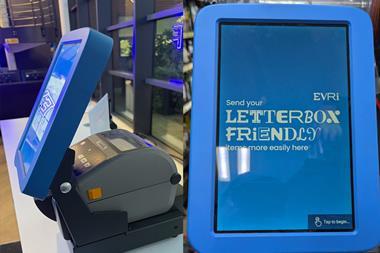
Partly off the back of a boom in social commerce platforms like Vinted, the option to send and receive parcels has become a core service many shoppers now expect from their local store. Shoppers will simply head elsewhere if a local retailer doesn’t provide the service, says Graham, leaving store owners missing out on both footfall and the incremental spend that often accompanies such an errand, as shoppers use the fact that they’re already in a store to grab a few household essentials.
“It’s as simple as if one store doesn’t offer that service and another does, then the latter will get my incremental spend that day,” he says. Yet providing an over-the-counter parcel service can be problematic for c-stores, which often operate with a small team of employees and limited floor space.
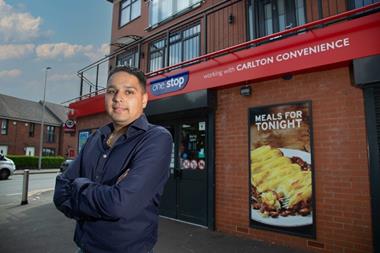
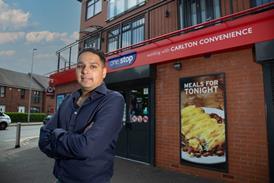
But providing an over-the-counter parcel service can be problematic for c-stores, which often operate with a small team of employees (many locals themselves) and often limited floor space. That was the case for Priyesh Vekaria, owner of One Stop Carlton Convenience in Manchester. Though allowing shoppers to drop-off parcels did act as a footfall driver, he found that it negatively impacted the store experience, with long queues and staff caught up processing parcels rather than helping customers. “We were losing customers shopping for products in our stores who were standing in the queue waiting for somebody with a parcel query,” he says.
“We were able to service the needs of our customers without getting bogged down in the execution and logistics.”
Priyesh Vekaria, owner of One Stop Carlton Convenience, Manchester
So, Vekaria changed tack, utilising space outside the store to install three self-service parcel lockers. It was a gamechanger. “We were able to service the needs of our customers without getting bogged down in the execution and logistics,” he says. “Doing it in that format meant that we were able to drive customers to our site [via a parcel service] but we didn’t have the challenges that we were having with providing that service in the store.”
It’s allowed Vekaria and his team to cater to multiple demands from their local community at once. “The level of customer service we’re now able to provide is far better,” he says. “Because before we’d be concerned that we’ve got to get products to put on shelves, we’ve got replenishing to do, we’ve got our daily tasks to do, all while also making sure that we service those parcel needs. We were spread far too thin.”
The case for parcel lockers is compelling for c-store owners, believes Graham. “If you haven’t got one, you’re missing out.”
Focus on flexibility
As Vekaria found, installing multiple lockers and thereby facilitating multiple courier services can help retailers capture more parcels and, as a result, more shoppers. But not every c-store owner has enough space to house multiple parcel lockers inside or outside their store. So, how should they prioritise?
That’s where carrier-agnostic parcel lockers come in. Rather than installing separate lockers for each courier, retailers can host a single solution that supports multiple carriers in one unit. “Instead of needing different lockers for Royal Mail, Evri or DPD, for example, carrier-agnostic lockers from Parcel Pending by Quadient allow all those parcels to be sent, collected and returned through one system,” explains Graham. “It’s a much more space-efficient option that also gives customers greater flexibility in how they manage their deliveries.”
Because these lockers can also facilitate a range of additional services – from luggage storage to Airbnb key exchange – they open up even more opportunities for retailers to support their local community and increase footfall. Graham adds that Quadient can also work with retailers to get the message out to their local communities on the services they provide. This includes toolkits that store owners can use to communicate clearly when lockers are installed, their benefits and how to use them. They feature a mix of assets allowing retailers to raise awareness and boost adoption – like window and POS point posters, plus digital resources like social media graphics, web copy and website FAQs.
The bottom line is that community has to be the focus for any c-store owner operating in the UK today, insists Vekaria.
“Anyone who operates a convenience store needs to understand that we’re community-first retailers,” he says. “And without understanding what the community’s needs, businesses will struggle. We need to be staying ahead of inflation, driving our efficiencies, and creating new opportunities for revenue growth and footfall by providing an array of services that members of our communities look for both today, and in the store of the future.”
If you’d like to find out more information or are interested in hosting a Parcel Pending by Quadient locker, click here.