

















1. The tobacco category is worth £22bn, with RYO increasing share by nearly two percentage points year on year
2. 78% of retailers feel like a generational ban would lead to more illicit tobacco in their local area
3. 80% of smokers bought illicit tobacco in 2023, up +7pp in 2022
4. 35% of vapers could return to smoking or illegal single-use vapes due to the Tobacco & Vapes Bill
5. More than a million illicit vapes were seized by trading standards in 2023/2024

1. The tobacco category is worth £22bn, with RYO increasing share by nearly two percentage points year on year
Bigger than soft drinks, chocolate and crisps, the tobacco category remains a steady source of revenue for independent convenience stores.
“Accounting for the biggest share of all tobacco sales (70%), the cigarette category holds a huge amount of value for retailers,” says Andrew Malm, UK market manager for Imperial Brands. “With more consumers looking for ways to reduce spending amid soaring household costs, we’re seeing a shift towards lower-priced propositions in both RYO and factory-made cigarettes.
“More generally, there is also continued demand for more intense tobacco blends and greater variety. This is driving sales in smoking accessory products such as flavour cards and menthol filter tips.”
In the past decade we have seen doors slapped on gantries, smaller tobacco packs taken off shelves and branding stripped, but that hasn’t seen product development stop. Scandinavian Tobacco Group’s recent launch of Signature Action Mix – which contains two capsules combining the flavours of berry and mint – shows that manufacturers are still finding ways to engage with smokers.
Heat-not-burn alternatives have also proved a successful next-gen product for smokers to move onto. “The percentage of convenience retailers now selling our Terea and Heets tobacco sticks has risen by 42% in two years, while cigarette sales declined by 34% during the same period,” says John Rennie, director of commercial operations at PMI UK&I. “This trend is also reflected in grocery multiples, where sales of Iqos kits grew by 269% between September 2021 and December 2023, while cigarette sales declined by 27%.”
Responsible retailers have always found ways to work within changing legislation to meet the needs of their shoppers, but there is one bill on the horizon that is causing more fear for store owners about their staff and their businesses than ever before. – the Tobacco & Vapes Bill.
“The independent retailer who doesn’t read the trade press or have the supply network with reps and their symbol groups, is going to find the Tobacco & Vapes Bill incredibly difficult to work through,” says Priyesh Vekaria, owner of One Stop Carlton Convenience in Manchester.
Set to come into force in January 2027, the Tobacco & Vapes Bill will bring with it a generational ban, increasing the legal age consumers can buy tobacco by one year each year, so that nobody born after 2009 can ever legally buy. It will also restrict vaping promotions and flavours, curb outdoor smoking areas, and bring in a new tobacco licence that retailers will need to buy to continue trading.
Back to top

2. 78% of retailers feel like a generational ban would lead to more illicit tobacco in their local area
The law will put retailers and their staff in the unenviable position of refusing sale of tobacco to adults, with fears that the legislation will only drive more sales to the illicit trade. Retailers, who have recently had to educate their shoppers that disposables will disappear, are once again expecting that they will have to do the same.
“Yet again it’s going to be on us to educate our shoppers, with little help from the Government talking about what’s changing,” says Anita Nye, manager of Eldred Drive Stores (Premier) in Orpington, Kent.
“We have too much to do without having to explain the changes to every smoker who comes in. And we’ll bear the brunt of the complaints and frustration from those customers, too.”
Manufacturers are continuing to push back against the Government and raise the trade’s concerns.
“At a time when convenience stores across the country are facing unprecedented levels of theft, violence and abuse, coupled with serious business pressures from the changes to the National Minimum Wage and National Insurance Contributions, we have been urging the Labour Government to consider the views of retailers before implementing any new legislation,” says Ian Howell, public affairs manager at JTI.
“There is no doubt that retailers are deeply concerned about the generational ban as part of the Tobacco & Vapes Bill. Retailers fear a generational smoking ban will result in increased violent behaviour in their stores and will lead to more counterfeit tobacco in their communities.”
JTI is urging the Government to instead implement a minimum age of sale of 21. In fact, 63% of retailers say they would prefer raising the minimum legal age of purchase for tobacco to 21 as an alternative.
“Government modelling shows that raising the minimum age of sale to 21 could achieve an equivalent fall in youth smoking as a generational ban, when ‘the majority of smokers start before the age of 20’,” says Howell.
Some retailers are already looking for solutions that provide protection for their staff.
“I’ve brought in a solution that takes the pressure of managing age-related sales away from my team,” says Priyesh. “It’s an AI-powered machine that can detect if the person is above 25 or not. It creates a barrier. People won’t be able to argue with the machine – like they might do with staff – but we do need the Government to give it formal approval.”
Back to top
ADVERTISEMENT

The growing opportunity for Nicotine Pouches:
• Nicotine pouches are a growing category — and FUMi has the bold flavour experiences your customers will return for.
• With a range of nicotine strengths, FUMi delivers quick flavour release and a long-lasting taste experience in slim, premium pouches.
• With strong margins to boost your business and a carefully curated range that caters to every preference, Swedish-made FUMi is the perfect addition to your assortment.
Four Profit-Driving Merchandising Strategies:
1. Premium Positioning: Place high-margin SKUs at eye level to drive value sales. This simple adjustment can significantly impact your category returns.
2. Range Innovation: Be first to market with new flavours. Early adoption of NPD helps establish your store as a category destination, building loyal custom.
3. Smart Secondary Citing: Create additional purchase opportunities by strategic placement beyond the main fixture. Till-point positioning has shown to increase impulse sales.
4. Impactful POS Implementation: Utilise supplier-provided POS materials effectively to drive awareness and create interest. Well-placed POS can influence purchase decisions and boost category engagement.

3. 80% of smokers bought illicit tobacco in 2023, up +7pp in 2022
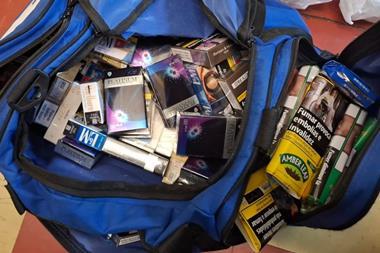
Buying from illicit sources has become so normalised that most shoppers – eight in 10 – now openly admit they buy from illegal sources.
“Legislation around tobacco taxes and excise duty has had a significant impact on illicit trade. Coupled with the cost-of-living challenge, consumers are seeking cheaper products – and this can sometimes lead to purchasing from illegal sources,” says Imperial Brands’ Andrew Malm. “Almost two thirds of consumers claimed that repeated hikes in tobacco taxes, coupled with increased living costs, had impacted their purchasing habits and where they now choose to buy ‘cheaper’ (illicit) tobacco.”
“Each time the price of tobacco goes up, it makes shoppers more likely to go onto illicit goods,” agrees Anita. “People will always find the money for tobacco; they will just stop spending it with us.”
But still prices climb. “In last November’s budget, a Recommended Price Index (RPI) +12% excise rate was placed on hand-rolling tobacco products in the UK,” says James Hall, UK & Ireland anti-illicit trade manager for Imperial Brands. “This means the UK now has the highest excise duty in Europe – six times higher than in Spain, and five times higher than in Germany.”
“Illicit tobacco is increasingly prevalent in the UK, driven by successive duty increases that push up tobacco prices,” says JTI’s Ian Howell. “Last year, the illicit sector grew to unprecedented levels – 30% of cigarette and 54% of roll-your-own tobacco consumption now comes from illegal and other non-duty paid sources. These figures underscore the urgent need for a comprehensive strategy to combat the illicit tobacco market.”
Back to top

4. 35% of vapers could return to smoking or illegal single-use vapes due to the Tobacco & Vapes Bill
The vaping category is still a lucrative source of profits. Despite outlawing the £85m disposable vapes market in stores earlier this year, pod systems doubled in value between 2023 and 2024.
In recent years, we have seen tighter restrictions on nicotine levels and formats in vaping and increasingly larger health warnings. While the disposables ban has been the most recent blow for many retailers, the Tobacco & Vapes Bill could give the Government the green light to regulate the flavours, packaging and display of vapes, as well as make smoke-free areas also vape-free.
“Research from Elfbar reveals around 2 million UK vapers would resort to illegal single-use vapes, return to smoking or smoke more if the Government imposes overly restrictive regulation on vape flavours,” said Eve Peters, director of government affairs for Elfbar.
“The findings align with the Government’s own impact assessment on the Tobacco and Vapes Bill, which found that 33% of smokers stated that they would not quit and/or smoke more if flavours were not available.
“With the single-use ban already set to disrupt more than 60% of the market, there is also the wider economic impact to consider – particularly for retailers, for whom single-use vapes have been a key revenue driver.”
Flavours remain a vital way for the category to remain appealing to smokers and help them transition away from the more harmful tobacco products. “Two thirds (64%) of adults prefer fruit flavours when it comes to vaping,” says Imperial’s Andrew Malm. Blu has responded to this with a range of new flavours, compatible with the rechargeable Blu bar and other devices.
Back to top

5. More than a million illicit vapes were seized by trading standards in 2023/2024
Illicit trade is a growing problem in vaping and the removal of single-use vapes will have the unintended – but entirely expected – consequence of fuelling this further. “The absence of single-use vapes is expected to push adult smokers who have come to rely on single-use devices to seek out illegal products – while undermining legitimate businesses and jeopardising the UK’s smokefree 2030 ambition,” says Elfbar’s Eve Peters.
“A recent Philip Morris survey revealed that 82% of independent retailers felt it was either ‘likely’ or ‘strongly likely’ that the illicit market for disposable vapes may increase after a possible ban on disposable e-cigarettes,” says Philip Morris’ John Rennie.
To fight back, it’s important for retailers to know the signs that the products they are selling are legitimate. “First, check for the standard and mandatory certification markings (CE or UKCA). Then, look for the wheelie bin symbol with a line through it, indicating compliance with the Waste Electrical and Electronic Equipment (WEEE) Directive 2012/19/EU,” says Peters.
“Additionally, the product packaging must feature a mandatory warning that nicotine is a highly addictive substance, covering 30% of the front and back of the packaging. And prominently display the manufacturer or importer’s name and contact details.”
Packaging must also include an age-restriction label. Retailers are also warned to apply common sense when considering products that use cartoon-like graphics or closely resemble well-known food and drink brands who would be unlikely to license their intellectual property to a vape manufacturer.
Nicotine strength is another important factor in determining whether a vape product is legal. Compliant vapes and e-liquids must not contain more than 2% nicotine (20mg/ml).
“Every authentic vaping product is also equipped with a Track and Trace code, which plays a key role in verifying its authenticity. This code enables the product to be tracked from the point of manufacture to the final point of sale,” says Imperial’s James Hall. “Retailers can scan the code on each packet to confirm the product’s legitimacy and compliance with regulations,”
Retailers are urged to remain vigilant and report any suspicions or evidence of illicit trading in their area to trading standards or Crimestoppers on 0800 555 111.










No comments yet