
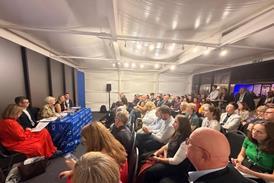













Former Australian Border Security officer and illicit tobacco expert Rohan Pike took some time to discuss the issue on a global scale, and how he worries that UK high streets could be at risk.
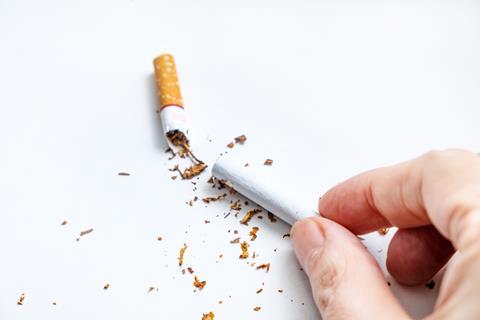
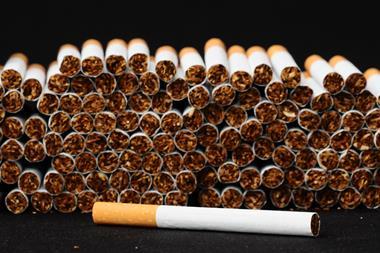
The illicit tobacco trade is severely damaging UK high streets, with no sign of letting up. Recent research by KPMG found that almost half of cigarettes (45%) consumed in the UK in 2025 were illicit.
This research revealed that illicit tobacco consumption rose by 1.5 billion cigarettes in 2025 year-on-year, making the United Kingdom the second-largest illegal market in Europe, behind France, for illicit cigarette consumption by volume. More than 10 billion illicit cigarettes were consumed in the UK in 2025, equating to more than £4.46bn in lost tax revenue for vital public services.
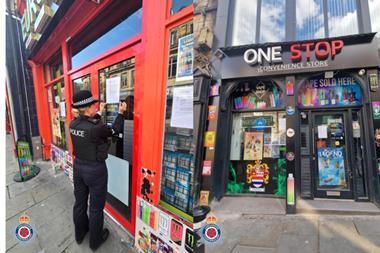
As well as the impact of lost revenue, there’s also the societal impact of rising rates of illicit trade. Studies by the Chartered Trading Standards Institute (CTSI) found strong connections between stores and Serious Organised Crime (SOC), bringing crime gangs to communities looking to take advantage of the illicit trade.
A former Australian Border Security Officer and now working as a consultant on the illicit tobacco trade, Rohan Pike has seen first-hand the impact of criminal gangs moving in when they see the potential of illicit sales.
In Australia, the government took the route of increasing the excise on tobacco as a means to curb usage, however there are concerns that this has backfired as recent statistics from the Australian Bureau of Statistics found that 80% of the cigarettes smoked in the country in 2025 were illicit, up from 12% in 2017.
Pike explains that the government’s tactic of increasing the excise on cigarettes has left an opening for gangs which has caused chaos on the streets of Australia and how it has lead to violence in the sector.
“There are around half a dozen armed robberies of service stations or convenience stores per night in Melbourne alone. I wouldn’t want to be working behind the counter at these stores right now.”
He explains that these increased levels of attacks on stores have caused serious impact to owners.
“One thing that’s different in Australia to the UK is the insurance problem. Due to the levels of crime, the stores have seen their insurance shoot up four or five times to make their businesses economically unviable. And that’s if they can get insurance at all - many cannot get insurance, and any shopping centres that house a tobacconist, all of the shops in that shopping centre will see their insurance shoot up or they force the tobacconist to leave. The insurance problem hasn’t become an issue in the UK as yet, but it certainly is at home.”
Pike says that it’s leading to people leaving the sector. “It’s one of the key reasons why these retailers are leaving the industry in droves. Or some have considered that they would stop selling tobacco, full stop. And that might sound extreme in the UK environment, but that’s where we’ve got to in Australia.”
Pike believes that increasing excise hasn’t worked in Australia. “Our tobacco control policy has made our cigarette prices the highest in the world. That lever has just been pulled far too far, causing a pseudo prohibition built on presumption that people will quit or pay the tax. But the easily available third alternative, being illicit, was never really factored in.
“Prohibition policies have never worked in the history of the world and they weren’t going to work here [in Australia]. And that’s what’s come to pass and it’s just got worse as the excise rate has increased and increased the difference between the legal price of a packet of cigarettes and the illegal price.”
“The high street is a uniquely British institution. It’s beloved, it’s the heart and soul of communities up and down the country. If they end up like Australia’s shopping centres, it’ll be a sad day.”
Does Pike believe that the same thing will happen in the UK?
“I do. If it goes unchecked and continues on the current trajectory, if I was to come back here in 12 months, I’m sure the problem will be far worse than it currently is. The high street is a uniquely British institution. It’s beloved, it’s the heart and soul of communities up and down the country. If they end up like Australia’s shopping centres, it’ll be a sad day.”
What does Pike advise retailers to do about it?
“Criminals come in fighting for the same market, basically, and that causes the conflict. And the traditional retailers, they’re caught in the crossfire. They lose out in all sorts of ways.
“To avoid that happening, retailers need to speak up. I know they probably think individually, what good is one voice? But as a collective, there’s tens of thousands of them and they should be using their support network to advocate on their behalf, because it’s a really important part of it. And just letting the government know what their policies are doing to them and doing to the high street.”
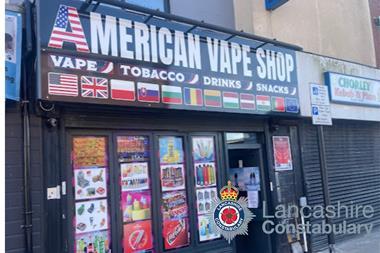
As the issue gains prominence in the UK, a £30m multi-agency task force has been set up to tackle ‘dodgy shops’ selling illicit products. While welcomed by the sector, Pike is adamant that “it’s never going to be enough”.
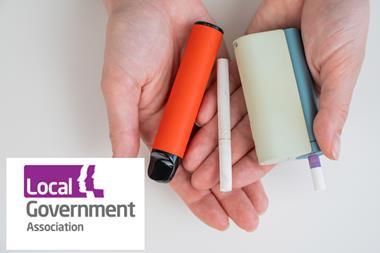
Pike also took some time to discuss some of the impending legislation that will impact retailers. Part of the Tobacco and Vapes Act, the UK government is introducing a mandatory licensing scheme for all retailers and distributors of vaping products which he has mixed feelings about.
”There are good and bad points to them,” he explains. ”They’ve been introduced in some states in Australia, but they’ve had absolutely no effect whatsoever on the availability of illicit tobacco in the streets. And that’s because we haven’t understood that not only is there responsibility on the licencee to follow the many rules and do the right thing. But there’s a responsibility on the government who’s introduced the licence regime to ensure a fair and equal playing field out in the marketplace. Also, because they’re getting paid the money of the licences, and that should mean that,they are held accountable to actually increase enforcement.”
Does that mean it won’t work in the UK? ”I would have doubts that that would happen here [in the UK]. There are concerns that it might not be as thorough or rigorous as the retailers would hope that it will be. And I will also add to that - there are laws now that it make selling of the illicit products illegal. So If you can’t enforce it now, what’s a licensing scheme going to do? It’s certainly going to put further restrictions on legal and proper retailers who will abide by all the laws as they do. But yeah, criminals will just ignore it and wait for the knock on the door, which may or may not come, so does it does it change that equation? Will it deter any criminals from actually entering the market? I have doubts about that.”
As well as the licensing plans, part of the Tobacco and Vapes Act is the Generational Smoking Ban which means that anyone born after 1 January 2009 will never be legally able to buy tobacco in the UK. Pike is sceptical that this will be effective. “It’s a symbolic gesture and will never be enforced. It’s unenforceable. It’s like plain packaging which never made a difference to the illicit trade in either country.”
“The introduction for me is symbolic on the part of the government but I think the broader picture is that it exemplifies a creeping prohibition mindset in the UK.”
He also warned that the Vaping Products Duty which is set to come into force on 1 October and will see a flat-rate excise duty of £2.20 per 10ml is ”only going to exacerbate the illicit trade and will add fuel to the fire”.
Who has got it right?
While Pike doesn’t believe that Australia or the UK has got it right, he does highlight some markets that have had success in smoking cessation without fuelling the illicit trade. “Sweden has had a little bit of good luck and a little bit of good management in the issue. The good luck is that it’s a cultural phenomenon where snus is central to their culture, so hardly anyone smokes in Sweden so they haven’t even had to enforce to the same level and haven’t had to spend billions of dollars in enforcement.
“I would suggest that Sweden got it right by not discouraging safer nicotine products. If snus was banned or vaping was banned or the new nicotine pouches were banned in Sweden, then people might think about going back to smoking, which would be a horrible outcome.”
Pike believes that pouches could be a route to smoking cessation. “Pouches are 1000 times less risky than smoking and who knows about them? Everyone should know about them. But they need to be regulated so people know what are in them and the government knows what’s in them and that they’re sold by responsible people.”
The other market that Pike says has got it right is closer to home for him. “The other one is New Zealand, which is quite embarrassing for Australia because it’s right next door to us, but they’ve got a much better process. Their smoking rate’s gone down to 6.8%. And the difference between Australia and New Zealand is that they’ve accepted safer nicotine products. They have a regulated vape market, with fewer illicit vapes. They’re about to regulate pouches because they realise that they’re safer as well. And that’s got their smoking rate down quite low.”
He does warn that some of the issues in Australia is starting to spill over into New Zealand. “They are starting to have a bit of a problem with illicit tobacco and unfortunately some of the Australian criminal gangs have cast their eye across the Tasman Sea and are going to start sending some containers New Zealand’s way, which threatens to undermine the nice, the proper trajectory that they’ve been on.”




No comments yet