Nick Archer2 (2)

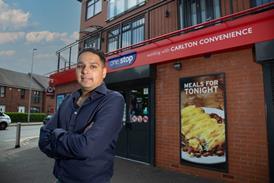
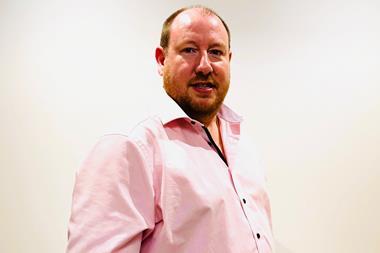
Nick Archer from DHL recently combined four channels of the business to better represent the convenience industry.

Changes have been occurring at logistics company DHL this year, with four of its main accounts having been grouped together in what has been named a convenience-specific business unit - so far so corporate.

But when you actually drill down into the structure of the unit and the thinking behind some of the decisions that lead to its formation, you find the new system has convenience retail at its core.

Convenience Store spoke to Nick Archer, managing director for Supply Chain at DHL, a man tirelessly enthusiastic about where DHL is today, and where it might be tomorrow. “Firstly, we’ve got four big ‘convenience accounts’ and we’ve got the business that we run with Nisa and Co-op Wholesale,” he explained.

“We’ve pulled all those together and I got the opportunity of making all that into a specialist business unit - a convenience business unit - and I don’t think it could have been better timing, really. It was a bit of a gift. It had always been a really challenging part of grocery retail and it wasn’t the most glamorous, going back maybe a decade or so. It was always a little bit of an afterthought with lots of independents, lots of different symbol groups and affiliations - and then it’s just taken off.”

That ‘take-off’ Archer mentions now spans 19 sites and over 6,000 colleagues for DHL, as well as 1,500 delivery drivers. “This is tough delivery work, the hardest delivery environment - high streets, villages, universities, city centres. It’s as tough as it gets, and these guys are absolute ambassadors. They’re doing maybe seven or eight drops a day looking at up to six or seven cages per drop. They make around 20,000 deliveries a week into the convenience market,” Archer said.

Archer believes DHL’s growth in the convenience sector stemmed from Covid. “These shopping habits of small, more frequent, local, really mission-led shopping trips, and food for now and later - that really changed things. It changed the face of grocery retail from the weekly shop to a really local offer.

”I’ve been doing this for 30 years now and it’s probably the most exciting era of supply yet.”

”The retailers and the symbol groups have picked up on that incredibly well. It just coincided with us investing in our capability. I’ve been doing this for 30 years now and it’s probably the most exciting era of supply yet, from a supply chain perspective.

“After Covid, I noticed - and also through Convenience Store - people had to buy local because they couldn’t go and do a monthly shop. So they did go local and I noticed the range changing and we noticed the environment improving, and all of a sudden there’s a bit of fresh food coming into those older convenience stores.

“Slowly but surely, they started to become hubs of the community, places where people could meet and buy over the counter medicines and have parcel drop-offs, and you can get longer opening hours, and the smaller formats became… real. You know, they really are hubs, and then I glued together these four businesses, and I could just see how people were changing their shopping habits.

“What has subsequently happened is it’s gone into super speed, whilst the cost-of-living crisis continues. That crisis is real, we’re all experiencing it. So people are, as we said, much more mission focussed. We’ve then got the really high performing convenience stores becoming fulfilment hubs now, which I think is brilliant.”

“Price is clearly the most sensitive driver of growth for stores, but availability is very, very close behind it.”

Naturally, in times when the cost-of-living is rarely out of the news headlines, Archer said he understands that convenience shoppers are also more price savvy than ever. “We know price is clearly the most sensitive driver of growth for stores, but availability is very, very close behind it.

“One in three shoppers will prioritise availability over price, so we look at this sector now probably in three ways. One is how can we drive out operating cost, because convenience is an expensive format to deliver to. How do we just make incremental improvements every day to drive our costs? That’s where we’re planning, routing, scheduling. That’s through picking better improvements in tech, our leadership, management and experience. That’s driving the unit cost down.

DHL-GROCERY-REPORT_3 (1)

“The second question is how do we improve the store owners’ experience? They’re totally reliant on us. So how is that presented? How complete is that order? How is our availability and accuracy? It’s expensive to get it wrong and tolerance is low because there’s not a lot of storage in these sites. So we’ve got to get that right.

“Thirdly, we’ve also got an eye on how we improve that store management experience. We’ve just invested really heavily in this part of the industry, probably for the first time in a long time. In equipment, talent, capability, sites, network, modelling that we’re planning - for me - that’s all right at the top of the agenda.”

As a result, the wider convenience world is something Archer said he’s watched grow with great pleasure. “We’re in and out of these convenience stores all day, every day. The environments are terrific now. The consumer can see the investment going in.

”You can buy cut flowers, you can buy fresh food, you can get bakery. You can hand over your parcel. It’s a nice shopping environment. DHL’s part is really valued, and I know those store managers, or owners - and store workers - are really relying on that delivery, and there is the margin for error is so small. It’s non-existent.

“As I mentioned, one in three shoppers will prioritise availability over price. That stat has stuck with me since we did a study. Over 60% of under 45s, that generation, are more regularly changing their shopping habits - they’ll move to another store if there’s persistent stock issues. So loyalty and that responsibility we have at DHL to create loyalty, we really feel it. We take it really seriously.”

Of course, it wouldn’t be a conversation about improving and streamlining systems if artificial intelligence wasn’t mentioned at least once. “We’ve put AI in our warehouses, where stores can phone AI customer service teams and ask what time a delivery’s coming,” Archer explains.

“They can check if there’re any missing items or what promotional items there might be. They can find out what cage a particular item is in. If the driver is 10 or five miles out, they’ll get a phonecall. We want that store to know exactly what they’re getting, when it’s coming, what’s missing, what’s on it, and what the weather’s going to be like. You can ask all those questions.

DHL FL EV_034 - Copy (1)

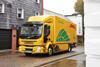
One of DHL’s trucks making one of the up to 20,000 weekly convenience deliveries.

“We know grocers are using AI and the symbol groups are using it for stock levels, then to assess of impact of stock outages, which I think is great because the ranges are increasing, so the storage availability and space is less and less, so it’s just helping stores, allowing them to focus on retailing. You don’t have to worry about availability or the supply chain. You don’t have to worry about consumer insight - we’ll give you all that. Stores can concentrate on what they really want to, which is looking after customers and retailing. That’s where I think AI is terrific. It really helps the store do what they do best.”

”It’s probably the toughest trading conditions for retailers at the moment…” 

But sadly there are still things which technology can’t help, as Archer explained. “It’s probably the toughest trading conditions for retailers at the moment, for the store managers that I’ve met. Whether it be legislative, or just operating costs. So, we take seriously the part we play in it, and that’s why we’re investing in the talent, the right talent. Companies are investing, you know, and the part that everybody plays is so critical.

“The consumers have seen it, because they go into a convenience store and they’re saying the availability is over 99%. They can get flowers, they can actually get cash, they can use a loyalty card and a brilliant own label range. What isn’t there to like?”