GettyImages-1448547403

Source: Getty

Food banks have been one of the major signs of the UK’s food poverty crisis in recent years.

The charitable and community food redistribution sector has come together with a pledge to triple food redistribution in the UK over the next decade.

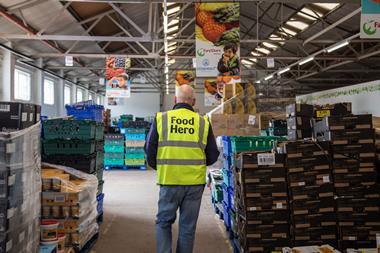
To show their commitment the seven main redistributors - The Bread & Butter Thing, City Harvest, Community Shop, Feeding Britain, Felix, His Church, Neighbourly and Xcess Network - have all signed a new covenant pledging to achieve the long-term goal, which is also supported by the anti-poverty charity and community of food banks, Trussell.

The covenant is part of the larger national programme to redistribute surplus food, which was announced by former PM Keir Starmer in May 2026 after the King’s Speech.

The redistribution covenant is made up of 18 principles that cover a wide range of topics, all of which are important to the sector.

1757258702282

Matthew van Duyvenbode (left), co-CEO of Trussell, said: “The practical principles of this covenant will help to support community organisations like food banks, which have been pushed to breaking point by persistently high levels of need in our communities.

”We believe this work must be accompanied by policies that tackle the root causes of poverty, hunger and hardship.”

“But it is hugely important that one of the first commitments is ensuring food redistribution is not seen as a way to solve food insecurity. We believe this work must be accompanied by policies that tackle the root causes of poverty, hunger and hardship, and there’s real power in this group collectively supporting those efforts.”

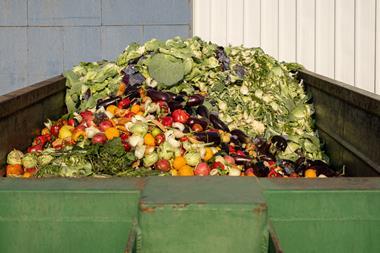
It’s estimated there is over 1bn meals’ worth of easily accessible, edible food currently going to waste in the sector. Vic Harper, CEO of The Bread & Butter Thing added: “We recognise that in any complex food system, there will always be large volumes of unavoidable high quality, nutritious surplus food.

“While progress has been made on how much of that is being redistributed, clearly more can be done. Everyone involved wants to see that food being used to deliver not only a social impact but an environmental one.”

The signees of the new agreement have over 30 years’ experience in food rescue and redistribution. Richard Humphrey, director of operations from His Church, said: “We believe by working together, our sector can overcome significant barriers to redistribution and unlock more ‘hard to reach’ surplus food, in line with the food waste hierarchy. There has genuinely never been a more important tine for surplus food to be redistributed for the good of our people and our planet.”

The covenant sets out a shared approach to governance, programme management, food sourcing, logistics and allocation, enabling charities and community food redistributors to collaborate to secure and redistribute more surplus food.

Screenshot 2026-07-27 152559

It also sets that when it comes to policy, charities and community food redistributors will lobby and influence on behalf of the sector with one voice. Gary Stott from Community Shop (right) said: “Having a joined-up approach to creating change is key. As a group, we know getting the Government to make policy changes will be needed alongside what we and food businesses are doing.

“This is the first time the charitable and community food redistribution organisations have come together on this scale, and it’s a clear demonstration of our collective belief and commitment to finding new and sustainable ways to increase the amount of perfectly good surplus food that’s being redistributed and used to support people and communities.”

One of the other areas the covenant covers is funding. Richard Gammage, CEO at City Harvest and co-chair of the Xcess Network, said: “As with any policy change, for us as a sector to achieve our goals it is vital to secure long-term and sustainable funding. As part of our collective pledge, we’ve agreed on several principles around funding to ensure it’s spent in the best possible way.

“It will be used to improve and develop existing redistribution infrastructure rather than creating something new…”

“It will, for example, be used to improve and develop existing redistribution infrastructure rather than creating something new that may already exist elsewhere. We’re determined that public funding is equitably distributed and directed towards the cost of sourcing and transporting additional food, for us to distribute.”

Charlotte Hill OBE (left), CEO of Felix, concluded: “We know food has the power to do so much good. For the organisations we support, food is a catalyst that creates change. Surplus food saves charities money and brings people in; from there they can access further support, advice, training or activities.

1684306160033

“Shared meals can combat loneliness, can reduce stress on tight budgets, build stronger communities and help children concentrate at school. Our joint hope is by coming together we really will see a future where good food is no longer wasted and instead fuels fuller lives.”