


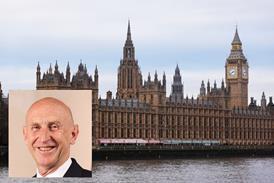







Tomorrow (28 October) sees the first Budget under the leadership of Prime Minister Andy Burnham and Chancellor of the Exchequer, John Healey.
In addition to the comments Convenience Store shared from retailers about their hopes for Wednesday’s announcement, industry insiders, businesses and trade bodies have also now gone on record to share their thoughts.
The British Independent Retailers Association (Bira) warned independent retailers face a looming cost crisis unless the Chancellor acts, with business rates, employment costs and energy bills all squeezing already tight margins.
Bira has already welcomed unconfirmed reports the Chancellor plans to fund business rate cuts by making online marketplaces collect VAT, and is urged Healey to confirm the money raised goes directly to rates relief for high street shops.
“Independent retailers will have even less headroom if support isn’t forthcoming in the Budget.”
Andrew Goodacre, CEO of Bira, said: “We appreciate that the economy is challenging and the Chancellor has limited room to manoeuvre, but independent retailers will have even less headroom if support isn’t forthcoming in the Budget. Rates, employment and energy costs are all heading in the wrong direction, and independent retailers need to see action on all three.”
Rates bill
Bira warns that, without action in the Budget, the average independent retailer faces a rates bill next year that’s 25% higher than this year, before inflation is added.
Goodacre added: “Such an increase is not sustainable in the current climate. Many independent retailers are already operating on the finest of margins, and a rise on this scale could be the difference between keeping the doors open and closing for good.”

Bira also pointed out that the cost of employment has risen significantly over the past two years, a period in which the retail sector has lost around 100,000 jobs, while increases in employer National Insurance contributions (NICs) continue to weigh heavily on smaller businesses.
Goodacre said: “The NIC increases are still damaging. If we want to create opportunities for younger people in independent retail, the Government needs to increase the Employment Allowance to reduce the cost of employment.
”Independent shops are often where young people get their first job, learn customer service and build the confidence to develop a career. We cannot afford to lose those opportunities.”
Multiplier level
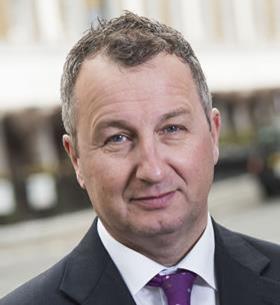
Speaking exclusively to Convenience Store, property agents Colliers’ director and head of rating, John Webber, said the Government needs to adjust the business rate multiplier: “What they could do - and should do - if they’re serious about helping the high street, is actually say next year that 5p is now going to be 10p or 15p lower, or even 20p lower. That’s almost what they were suggesting they were going to do before, but they didn’t because they ran out of money.
“What they effectively did was make it so the people with properties over £500k rateable value with the higher multiplier were going to have to pay for the lower multiplier. In the end, they bottled it and basically said, well, we’ll just team them all together.
“They’ve got they’ve got the opportunity to do something. If they’re serious about helping the high street, they could do it.”
Staff costs
Meanwhile, business development firm, Charlie HR, called on the Government to introduce targeted measures to help struggling small businesses to “bounce back.” CEO and founder, Ben Gateley, said: “The Government needs to recognise that helping small businesses recover means giving them practical support to retain staff, create jobs and invest in growth.
“One measure I’d like to see is targeted financial support for small businesses taking on new employees, whether through a temporary reduction in employer NICs for qualifying new hires, or an expansion of employment allowances to give smaller employers more breathing room.”
“Businesses need greater certainty to make decisions about their workforce. A clearer, more predictable approach to employment-related costs, alongside targeted support for small businesses investing in their teams, would help employers plan ahead rather than continually having to react to rising expenses.”
Rate rise
When it comes to business rate levels themselves, company formation agents 1st Formations was vocal in calling for an increase. Graeme Donnelly, CEO and founder, said: “Raising the Small Business Rates Relief threshold from £12,000 to around £17,000 would be welcome news for independent shops, cafes and other small businesses with premises.

“When you’re already managing wages, energy bills, rent and other rising costs, reducing one significant overhead can free up money to reinvest in the business.
“If the Government wants to support the high street, it needs to look beyond footfall and consider the costs businesses face every day. The same applies across the wider small business economy, including the many new companies run from home that don’t pay business rates at all.”
Business impact
Finally, also commenting on the many pressures facing small businesses ahead of the Budget, Julie Fisher, UK CEO at Simply Business, said: “The autumn Budget is a golden opportunity for the new Chancellor to signal his support for the UK’s 5.7m small businesses and place them at the heart of our economy’s growth plan.
“Urgent support in key areas and a greater emphasis on long-term stability are needed…”
“The message from small business owners is clear – they remain confident, but urgent support in key areas and a greater emphasis on long-term stability are needed if they are to fulfil their potential.
“From our research, 65% say political policy shifts are directly affecting their ability to plan. Without the stability needed to confidently invest in their business they are having to scale back their growth - whether that’s hiring employees or planning an expansion.
“These challenges are being further compounded by rising operational costs. Half of small businesses have raised their prices to offset these increases, and almost as many have absorbed them (44%).

Postive indicators
“There have been positive indicators in recent months with support measures announced across business rates for pubs and bars, but the high street is an ecosystem. Among the bricks and mortar businesses we surveyed, 60% say the revaluation of rateable values has affected them.
“Of those, over a third have raised prices, one in seven (14%) have reduced employee hours and one in eight (13%) have made the hard decision to let employees go.
“Employment and payroll costs were named as one of the two biggest cost rises…”
“These businesses also face a further cost disparity - employment and payroll costs were named as one of the two biggest cost rises by 35%, more than three times the rate for businesses without a shop front (11%).
”Support should reach beyond pubs, alongside structural reform so owners are not left guessing what next year’s bill will look like.”
Fisher concluded: “It’s clear the community needs long term support measures and less frequent policy changes if they’re to thrive. Given the right conditions small businesses can plan for the future, creating jobs and driving the growth the Government wants to see.”







No comments yet