



















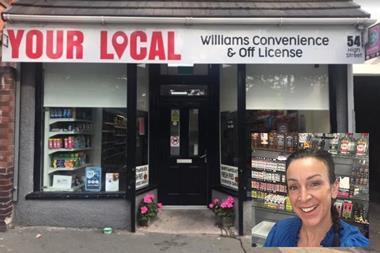
You might well expect Salford’s Priyesh Vekaria to be a responsible retailer, what with his history of working in the police force before he ever worked as a retailer.
But Priyesh said he believes retailing in a responsible way is more than just checking the ages of customers. He said it can impact his community as well as his business. “There’s a much wider reputational risk,” he told Convenience Store.
“The trust of local residents is extremely important to us.”
“We operate at the heart of our community, and the trust of local residents is extremely important to us. The financial value of an individual transaction is insignificant compared with the reputational damage that could be caused by becoming known as a business that doesn’t take its responsibilities seriously.
“Responsible retailing and commercial success shouldn’t be seen as competing priorities. In my view, responsible retailing is part of what creates a sustainable and trusted convenience business in the first place.”
360-degree process
The selling of age-restricted products, Priyesh believes, is a full 360-degree process, and not simply about simple spot checks. “When I opened the store, I developed our training model around a dynamic risk assessment approach. The principle is simple - we take responsibility for every age-restricted transaction that takes place in our business.
“That means not only verifying age where required, but also considering the wider circumstances of the transaction, including whether there are concerns around intoxication, proxy purchasing, vulnerability, suitability or an individual’s capacity to make the purchase appropriately.
“Our expectation is that staff should feel confident refusing any transaction where something doesn’t look or feel right, regardless of the value of the sale.”
Staff support
Priyesh added that it’s vital his staff - the frontline of responsible retailing - are trained correctly but also feel confident. “We use a combination of training, technology, clear procedures and management support. Challenge 25 is embedded into our everyday operating culture. Staff receive comprehensive in-house training, but we go further than the minimum requirement.
“Members of the team have also undertaken externally delivered training, including personal licence training and its relevant qualifications, to give them a stronger understanding of their responsibilities.
“We also use age-verification technology through MyChecker to support colleagues in making decisions at the point of sale.
“Importantly, the technology supports the colleague rather than replacing their judgement. Staff are trained to make a dynamic assessment of the entire transaction and are empowered to refuse a sale whenever they have concerns.”
Daily checks
Priyesh said the number of incidents in his store where refusals do occur number around four or five a day. “Our staff then have to refuse sales because a customer can’t provide valid ID. Because our Challenge 25 policy is well established and consistently applied, most understand what’s expected. Where someone can’t produce acceptable identification, the transaction simply doesn’t proceed.
“Consistency is important. Once customers understand there won’t be exceptions, arguments over identification tend to reduce considerably.
“A refusal can sometimes result in verbal abuse or an altercation…”
“There are obviously serious regulatory and licensing consequences associated with an unlawful sale, but from an operational perspective, one of the more immediate risks is confrontation. A refusal can sometimes result in verbal abuse or an altercation, which in more serious cases can escalate into threats or damage to property.

“Fortunately, incidents of violence and aggression occur relatively rarely. We’ve worked hard to create a culture in which customers understand that age verification is simply part of shopping in our store.
“Most importantly, the team know management will support them if they refuse a sale in good faith. I’d always rather lose a transaction than have a colleague feel pressured into completing a sale they’re uncomfortable with.
Proxy purchases
Fortunately, Priyesh also said that he hadn’t seen an increase in proxy sales - where someone buys age restricted products for a younger person who might be waiting elsewhere. “Our store has developed a reputation locally as somewhere that takes age-restricted sales seriously.
“Put simply, we’re known as the place not to go if somebody’s looking for an easy way around the rules.
“Staff are also trained to look beyond simply checking the age of the person standing at the till. If there are indicators that a purchase may be intended for somebody underage, the team is empowered to question the transaction and refuse the sale where appropriate.
”That reputation is actually one of the strongest preventative measures available to us.
“We operate as a community-first retail business and take enormous pride in the trust our customers place in us. Maintaining that has far greater long-term value than completing a transaction that should have been refused.”
”I’d take a significantly harder stance on rogue traders.”
Despite Priyesh and his team’s work to tackle illicit sales, he admitted he felt some resentment towards those stores not following the rules: “I’d take a significantly harder stance on rogue traders. The overwhelming majority of responsible retailers will adapt to legislation, invest in training and comply with new requirements.
”The real frustration arises when businesses making those investments see competitors deliberately ignoring the rules with little meaningful consequence.
“Enforcement needs to create a genuine deterrent. Where retailers repeatedly or deliberately sell age-restricted or illicit products unlawfully, regulators should have the resources and powers to intervene quickly and decisively.
New regulations
Looking ahead, Priyesh said he hopes that the Government will provide clarity on any new laws or regulations it imposes. “At the moment, the greatest challenge is uncertainty. Responsible retailers will generally embrace clear regulation because it creates a level playing field and gives businesses certainty about what’s expected.
“Where difficulties arise is when there’s a period of changing legislation, consultation or unclear implementation timelines. That can make it more difficult to train staff, invest in compliant fixtures and systems and communicate changes effectively to customers.
”The responsible retail sector is capable of adapting very quickly when the rules are clear.”
“Clear guidance, realistic implementation periods and consistent communication would make compliance considerably easier. The responsible retail sector is capable of adapting very quickly when the rules are clear.
“Responsible retailers should never be placed at a commercial disadvantage because they choose to follow the law. Ultimately, good regulation should reward responsible behaviour while making deliberate non-compliance commercially unviable.”











No comments yet