
















Small and rural Post Offices are braced for a business rates hike this year, as a major increase in bills will see them collectively paying an additional £29m in the upcoming fiscal year, new research commissioned by the Post Office has found.
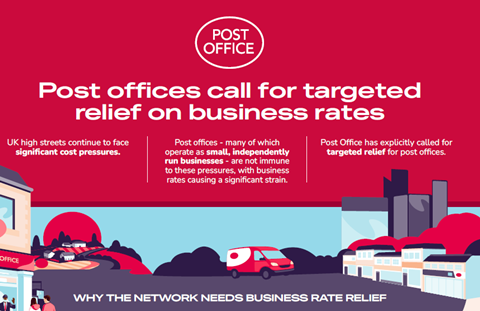
An analysis of the impact of the removal of business rates relief, new valuations and other changes to the system has led the Post Office and its postmasters to call for a level playing field for the hard-pressed network, as well as special support targeted at crucial branches.
The average business rates bill a Post Office branch will pay this year is £3,700, while one in four branches are due to pay over £5k - and nearly one in ten branches are expected to pay over £10k in business rates. The Post Office said these high levels of tax are often “disproportionate to their size and turnover.”
The research also found that Post Office branches are expected to pay £43m collectively in business rates in the 2026/27 financial year, representing a nearly 200% increase across the network. This year, Post Offices will pay a higher share of their gross value added (GVA) in business rates - 10% - than the overall retail sector which pays less than 5% of its GVA in business rates.
These business rate increases are falling disproportionately on rural Post Offices, with the average branch facing around a four‑fold increase in its rates bill compared to 2023–24. Smaller and rural branches are less likely to be profitable and are now exposed to small valuation changes that trigger higher liabilities.
To ensure Post Offices can continue to provide their essential services in communities across the UK, they are now calling on the Government to deliver targeted business rates relief across all four nations. This would be in addition to limited relief already available in Wales and Northern Ireland.
The current business rates system replaced the previous Retail, Hospitality and Leisure (RHL) relief - which capped the tax at £110k per business. This year, 600 additional branches across the UK will become liable for business rates for the first time, and for smaller, rural branches in particular, these changes have meant a four-fold increase in their tax bills in the past few years.
”There is a structural unfairness in how the tax burden falls across the network.”
Neil Brocklehurst, Post Office CEO, said: “Post Offices are a lifeline for many communities. There is a structural unfairness in how the tax burden falls across the network. In reality, most Post Offices are small businesses run independently by postmasters, yet they are being taxed as if they were large retailers.
“As we set out in our Green Paper response to the Government earlier this year, the unique social contribution that Post Offices deliver in communities should be recognised and protected, and we know the Government recognises this value too.
“We hope the Government’s upcoming High Streets Strategy will go some way towards levelling the playing field for vital small businesses like Post Offices that continue to provide essential in person services for communities across the UK. Business rates relief is one feasible yet hugely impactful way to do this.”








No comments yet