






More than two thirds of the UK convenience retail workforce is female - but women account for just 37% of those that own or run convenience stores [ACS The Local Shop Report 2025].
The role of women in the convenience sector, and how women can build a career in the industry, are among the topics under discussion at the National Convenience Show in April.
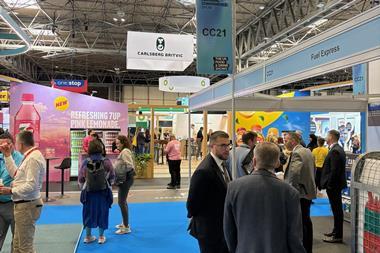
Held at the NEC Birmingham from Monday 13 to Wednesday 15 April, the National Convenience Show is part of The UK Food & Drink Shows event that also includes the Forecourt Show, Food & Drink Expo and Farm Shop & Deli Show. For further information see the end of this article.
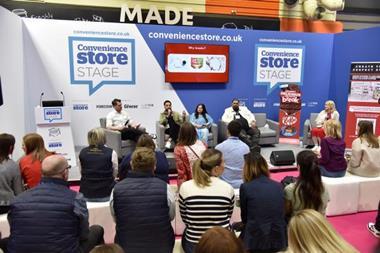
Each show features a packed programme of presentations and discussions, including The Female Leaders Shaping Convenience, which takes place at 11.45am on Monday 13 April.
This session will shine a spotlight on some of the most inspiring and influential women in the UK convenience retail sector. Find out how their careers began, the challenges they overcame and the advice they would share to aspiring females looking to build a successful career within convenience.
Ahead of next month’s event, we asked the panellists to tell us a little about themselves, and what they see as some of the key issues impacting the convenience market:

Vicky Hennessy, CEO, Penny on the Move
Vicky started her career at B&Q in managerial and HR roles before retraining in CAD and combining retail expertise with a passion for design by working at Shopmate. Following collaborations with David Penny on shop projects, Vicky joined Penny Petroleum and now serves as CEO of Penny Petroleum/Penny on the Move, overseeing 99 petrol forecourts and more than 1,200 employees.

Trudy Hills, trading director, Spar UK
Trudy started her career in sales and trade marketing with Procter & Gamble and prior to joining Spar worked for several retailers including Asda, Iceland, Pets at Home and Halfords.

Natalie Lightfoot, convenience store owner
Natalie took on an empty shop unit 19 years ago with her brother and transformed it into a licensed convenience store measuring 620 square foot. Working with her husband and 11 staff, she has shaped the business to become the highest pound per capita Snappy Shopper store in the UK.

Debbie Robinson, chief executive officer, OurCoop
Debbie became chief executive officer of Central Co‑op in 2019, and has led major transformation including the 2025 transfer of engagements that created the UK’s largest independent co‑operative society. Her career includes senior leadership roles at Spar UK, The Co‑operative Group, Marks & Spencer, and WH Smith.
What is has been your career highlight?
Vicky Hennessy (VH): Winning Forecourt Trader of the year 2025 in my current role as CEO.
Trudy Hills (TH): Winning Retailer of the Year at the Mother and Baby Awards while I was at Asda. It was completely unexpected and showed what an incredible job the team, alongside our supplier partners, had done to transform the department, using seasonal feature space to offer extended ranges.
Natalie Lightfoot (NL): Winning the Scottish Grocer Industry Achievement award and revealing it on the night to my dad by going on stage and delivering a speech from the heart. Also, two months earlier receiving the Raj Aggarwal Heart of the Community Award in Parliament.
Debbie Robinson (DR): Too many to list but I’m delighted to have worked on the creation of OurCoop, bringing together long-established co-operative societies to form the UK’s largest independent co-operative while staying true to co-operative values.
What has been the most positive change in the convenience retail industry since you joined it?
VH: The most positive long-term change has been that the UK convenience retail industry didn’t just survive - it grew, modernised, and adapted. More stores, more investment, and more services mean the channel has become more convenient and valuable for local customers than it was ten years ago.
TH: Prices are now far more competitive than ever before. The perception that convenience is always significantly more expensive than larger retailers has shifted, particularly post-Covid. Retailers recognise they can’t afford to push customers away with unfair pricing, and shoppers are increasingly seeing that convenience offers real value as well as ease.
NL: That women are becoming more equally viewed as leaders in our industry for all the right reasons.
DR: The growing recognition of convenience retail as a vital community service, not just a transactional channel, particularly its role in supporting local economies, accessibility and everyday life.
What is the biggest challenge faced by women in the industry in 2026?
VH: Women are significantly under-representation in leadership and decision-making. Even though women make up a large share of the workforce in convenience and retail, they’re still significantly under-represented at senior levels. Like many parts of retail, convenience often relies on irregular hours and multiple roles — and women disproportionately juggle this with childcare and family duties.
TH: Some businesses are still quite male dominated but it’s much better than it was. There are now strong female role models and networks available to support those who find it helpful. Women in Wholesale is a great example of a group that has helped many women to develop, build confidence and succeed in their careers.
NL: The dual expectation to both succeed and step back sooner than their male counterparts.
DR: Balancing senior leadership opportunities with visibility, confidence and inclusion in what remains a demanding, fast-paced and traditionally male-dominated environment.
What is the biggest challenge faced by the industry as a whole in 2026?
VH: Staying financially viable in an environment of rising operating costs, tightening margins, and shifting consumer expectations.
TH: Increased costs across the board – from commodity pricing, duty, wages and National Insurance to HFSS and DRS. At the same time, shoppers are cutting back due to the cost-of-living crisis. It’s never been tougher, which means the industry has to be more agile, efficient and customer focused than ever before.
NL: Looking after our mental health in such a turbulent environment of responsibility. The ever-changing legislation has applied pressures to even the most talented and successful retailers
DR: Managing rising costs and regulatory pressure while continuing to tackle retail crime and invest in people, sustainability and community impact.
What makes you feel positive about the future of convenience retail?
VH: Convenience retail is able to adapt fast! We often lead the way in market trends and are closer to the consumer than larger supermarkets. In tough times, people trade down from big weekly supermarket shops and do smaller, more frequent trips. That tends to support convenience stores.
TH: Convenience has the advantage of being local and providing a personal touch that larger retailers can never replicate. Being close to customers, tailoring ranges to local needs and delivering great service will continue to be key to building loyalty and driving long-term growth.
NL: People are increasingly placing more value on service due to being time poor, and our industry’s ability to be flexible and reactive will mean we will succeed where the supermarkets fail.
DR: The sector’s ability to adapt, innovate and stay close to customers, combined with a renewed focus on purpose, people and responsible growth.
What advice would you give to a young woman considering a career in convenience retail?
VH: Convenience retail isn’t just stacking shelves. If you treat it like running a small business — even if you’re not the owner — you’ll accelerate quickly. The people who progress are the ones who understand profit, not just product, and ensure the people who matter know that you want to progress.
TH: Go for it. The industry needs diversity and you have so much to offer. Build a strong support network and don’t be afraid to ask for help. If it would be useful, ask someone to be your mentor – most people are more than happy to support you and they will learn from it too.
NL: Find your people. Find your network. Do not be afraid to ask for help - it’s not a weakness; it’s a strength and your superpower. Often we believe that we will not be seen as coping but actually with support is when we thrive.
DR: Be confident in your ability, be curious, say yes to opportunities even if they feel stretching and don’t underestimate how influential this sector can be.
What is the best piece of professional advice you have been given?
VH: Focus on what you can control and be excellent at it.
TH: Be your authentic self. You can never be successful or happy trying to behave in a way you think is ‘right’ if that isn’t who you genuinely are.
NL: Focus on your own actions and be accountable for them to keep moving forward. If you spend your time focusing solely on what others are doing you will forget to focus on yourself. Also, mistakes are lessons. To fail is your first attempt in learning.
DR: It’s easier to ask for forgiveness than permission.
The UK Food & Drink Shows 2026
The UK Food & Drink Shows 2026, taking place at the NEC Birmingham from Monday 13 to Wednesday 15 April, comprises four shows that each target a sector of the food and drink industry:
· National Convenience Show is the biggest event for the convenience retailing sector and is a one-stop destination for c-store specific products, services and innovations.
· Forecourt Show is the must-attend event for sourcing products, fresh ideas and smart solutions to future-proof your business.
· Food & Drink Expo is the destination for discovering fresh ideas, forging connections and gaining insights into the future of food. It attracts key foodservice buyers as well as decision makers from retail and wholesale grocery operations.
· Farm Shop & Deli Show offers the best-quality local and regional produce alongside the latest in equipment, labelling and packaging solutions.
Around 1,200 businesses will be exhibiting across the four shows, and more than 25,000 visitors are expected to attend the event to explore new products, services and equipment that will help their businesses flourish.
Once again, The UK Food & Drink Shows will offer a packed programme of insightful panels and expert speakers alongside new attractions. These will include a Spotlight on Coffee Shop & Café highlighting the latest trends and products shaping the sector, and a Spotlight on Future Foods that will showcase wellness-driven, clean-label and sustainable products.
To ensure visitors make the most of their visit, an online digital event companion will offer a comprehensive event guide, interactive floorplan and real-time notifications.
The UK Food & Drink Shows is organised by business information provider William Reed. Covering industries ranging from food and drink to pharmaceuticals and cosmetics, William Reed publishes digital and print media, including The Grocer, and organises prestigious awards and business events.
“We appreciate that retailers and suppliers continue to face intense pressure and are confident the shows can help to equip businesses with the knowledge and inspiration to grow and flourish,” said Dan Dixon, MD of exhibitions, William Reed.
“At the heart of it all is the power of face-to-face interaction; the chance to have meaningful conversations, experience products first-hand and build relationships.”
To find out more and register for free tickets visit The UK Food & Drink Shows website.


No comments yet