














The UK’s deposit return scheme launches on 1 October 2027. With one year to go, we set out the practical steps convenience retailers should be taking now to get ahead of the biggest change to drinks packaging in a generation
There’s just a year to go until the landmark deposit return scheme (DRS) launches across the four nations of the UK. Designed with the aim of boosting recycling rates and promoting a circular economy, from 1st October 2027 drinks containers between 150ml and 3 litres in volume and made wholly or mainly from PET plastic, aluminium or steel, will carry a 20p deposit, refundable to customers when they return the container for collection. In Wales, the scheme will also include glass drinks containers.
Exchange for Change was recently appointed as administrator for the scheme in Wales, marking the latest key milestone on the journey towards DRS’s launch. It means there will be one administrator for the schemes across England, Scotland, Wales and Northern Ireland, providing much-welcome consistency for business and consumers.
Following a flurry of announcements from Exchange for Change about how DRS will operate, now is the time for retailers to start planning for this new era in how the UK deals with drinks’ packaging.
“Convenience retailers have a clear choice to make when preparing for DRS,” says Sondre Henningsgård, UK managing director for TOMRA. “In other markets, we’ve seen larger chains move early, while independents have taken longer to prepare and that can have a real impact on footfall over time.” he adds.
So what are the practical measures convenience retailers should be taking now to be ready for DRS?
The first step is for individual stores to determine whether they are in-scope of the scheme. Small stores located in an urban area with retail space under 100m² are automatically exempt, although they can voluntarily opt-in should they so choose. Otherwise, all grocery retailers are required to register as return point operators with Exchange for Change.
There is then the possibility for retailers to apply for an exemption should certain criteria be met. In urban areas, a store with a retail space of between 100m² and 199m² can apply for an exemption based on size as can a store in a rural area with a retail space below 200m².
If Exchange for Change is satisfied that other local participating stores provide adequate coverage for shoppers and are willing to accommodate the increased volume, it may also grant a proximity exemption for retailers not wanting to host a return point.
There is also the opportunity for retailers to apply for an exemption based on site-specific constraints where they can demonstrate that the store’s location, layout, size, design or construction cannot reasonably be altered to permit the operation of a return point on the premises.
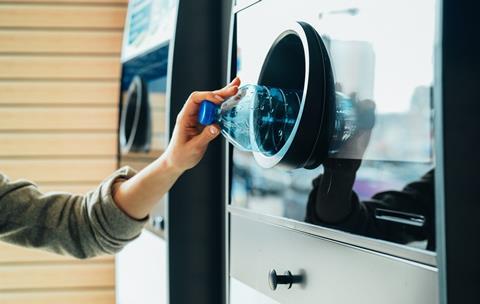
Samantha Walker, DRS project lead at Coca-Cola Europacific Partners, advises c-store owners to think carefully about the opportunities presented by DRS before actively seeking an exemption. “C-stores play a unique role in the community for people, particularly those who are not able to travel. Operating a return point provides a local service but is also something we believe they can really benefit from,” she says.
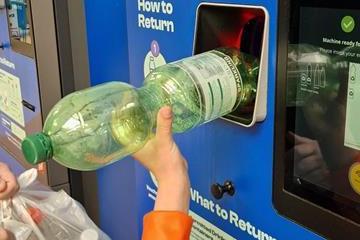
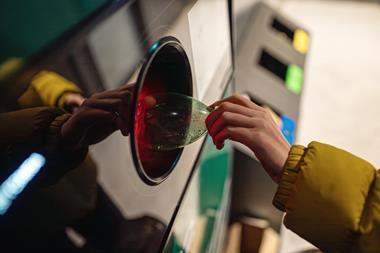
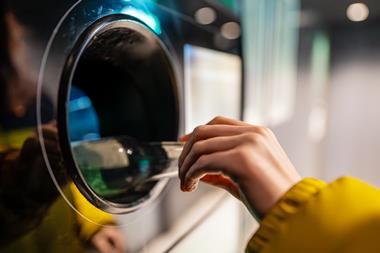
One of the key initial decisions retailers will need to make is over how to collect empty bottles and cans. Manual take-back of containers is one option for businesses, but most stores are expected to install a reverse vending machine, which digitises the process of returns thus reducing friction for customers and store staff.
C-store owners will be able to choose from an array of RVMs that vary in size and sophistication. They will need to choose a machine suitable to their specific store context and situate it in a location that balances customer convenience with operational practicalities.
Later in the autumn, Exchange for Change will publish a list of accredited RVM suppliers, giving retailers confidence that vendors are operating to a high standard.
The administrator has also announced a package of targeted support to help stores manage the upfront costs of hosting a return point. A total of £60m in grant funding will be made available to help up to 10,000 small, independent retailers meet the cost of installing RVMs across England, Northern Ireland and Scotland. Grants of £6,000 will be made available per site to qualifying small, independent retailers in three annual payments of £2,000, which will be funded three months after the installation of an RVM. More detailed eligibility criteria for grants are due to be published in Q3 2026.
“This support makes DRS more viable for convenience retailers. But the decision (over which machine to install) shouldn’t be based on upfront cost alone. Long-term value comes from reliability, uptime, and the ability to drive footfall and sales,” says Henningsgård.
Beyond these key infrastructure decisions, retailers are advised to get a headstart with consumer and employee engagement over what DRS entails and – from an employee perspective – how they will be expected to support the operation of a return point in-store.
C-stores should also begin to think about how DRS might affect the range of drinks they stock. Walker says range rationalisation is a key lever to help manage complexity around the period of DRS’s launch when new stock will carry the deposit while older stock will not. “If you’ve got a smaller range then you can make that transition much smoother because the old non DRS products will sell through quicker,” she says.
October 2027 may seem a long way off but the months will quickly tick by. By preparing now, c-stores can put themselves in pole position once the long-awaited DRS finally becomes a reality.



No comments yet