










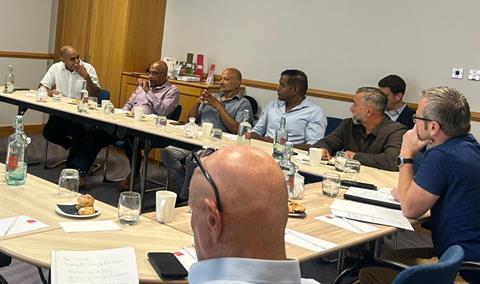
The harsh reality of the impact of the illicit tobacco trade on businesses and communities was laid bare at a recent retailer roundtable in Croydon, South London.
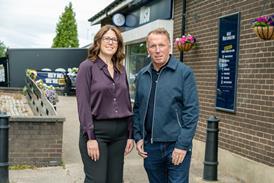
Organised by JTI UK and Convenience Store, the roundtable included store owners from the area as well as representatives from JTI to discuss the illicit tobacco and vape trade, the impact on sales and relationships with the authorities trying to tackle the issue.
The roundtable comes following a series of test purchasing visits organised by JTI that found that 27% of stores had sold illicit products, with prices as low as £4.50 per pack.
Further research by JTI revealed that the people of Croydon are well aware of the issue, with 78% of people surveyed in the area believing politicians are not doing enough to tackle illegal tobacco trading; 89% concerned about the damage illegal tobacco is causing to local businesses and 93% concerned that illegal tobacco supports the funding of organised crime.
Despite the fact that the majority of Croydon residents surveyed expressed concern that illegal tobacco supports the funding of organised crime, the retailers present believed that these worries don’t factor into consumers’ decision to buy illicit tobacco, and that the rise in the cost of living meant that shoppers had more of a focus on not spending as much money.
“Their [shoppers’] bottom line that is you’ve got £10 in your pocket, and you go into a shop for a packet of cigarettes, you can either opt for a 10 pack of cigarillos which would be slightly below that threshold, or if you’ve got the option of an illicit or a duty evaded pack for £5,” explained Kaual Patel of Nisa Torridon. “Your logic will be ‘oh, I’ve got five pound - I’ve got enough for lunch now as well’.
“If it was maybe two- or three-pound difference between the prices, then yes, they might buy the legitimate one but there’s no way that gap is going to close. If the price of legitimate tobacco dropped to the point that it’s no longer profitable for criminals to sell illicit products, then there might be a chance. But the problem is because it’s so profitable for them, it doesn’t matter.”
Kaual added that it’s impossible to deal with individuals who are unafraid of consequences. “I’m hearing how Trading Standards officers are getting intimidated. They’re [illicit tobacco store owners] really harassing them, following them, harming them. Telling them that ‘we know where you live’. If you’re that brazen to threaten Government officers who are coming to their job, I mean they don’t give a damn. How do you counter that?”
“They couldn’t care less if they get caught because they know there’s no repercussions”
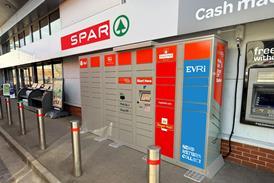
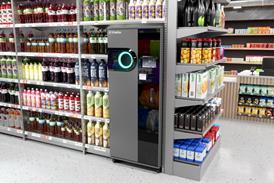
Kaual was an outlier in the group as his tobacco category sales were up. But this was down to tremendous effort on his part. “I’ve actually increased my tobacco sales. I’ve got an automated dispensing system and I’ve now added a second gantry underneath the counter, and I’m now still struggling to fit everything on. I’ve actually got more SKUs in tobacco than ever before.”
He says that the illicit trade would ruin his business in other ways and that’s where rogue traders take advantage. “I’ve spent years building up my business and reputation. We’re not going to be stupid enough to make a quick buck, but the biggest issue is that there are so many people out there that do not care, and they’re the most dangerous people. If someone has nothing to lose, there is nothing you can do to them, and this is the reality of the situation. They couldn’t care less if they get caught because they know there’s no repercussions.”
Ian Cawley of Park Garage Group explained how tobacco sales in the group’s stores have halved over the past five years but doesn’t believe that it’s down to people moving away from the category. He also raised the issue of cigarette theft from stores, with the product being sold on elsewhere, adding another dimension to the illicit trade issue.

As well as the business cost, Benedict Selvaratnam of Freshfields Market outlined the societal impact of illicit products being sold in an area. “There are two stores near us and you can’t miss them – they have neon lights and are very bright but they attract a lot of antisocial behaviour, and no one seems to do anything about it.
“When I did see a raid about seven or eight months ago, but it was almost a cliché. Within a couple of days, they were back open again with a different person in charge.
“It gives the impression that it’s not a focus for the council. Maybe they’re thinking, oh, business rates and at least some money’s coming in but for sure we don’t see enough enforcement.
“I recently got an email from Trading Standards talking about Jolly Rancher and they want us to stop selling this type of product for whatever reason. But you never see an officer come in to ask us about illicit tobacco in the area.”
Benedict added that there was likely some confusion amongst shoppers about what is actually illicit or not. “I sympathise with some of the customers because they’re buying fake or these illegal tobacco from the high street, they think it’s almost legal. They’re not buying these in the back of a car park or in the middle of the night. They’re going into a shop, broad daylight, and you’re asking for packs, and they’re giving it to you. So the customer is thinking, maybe it’s not black market, maybe it’s grey market, maybe it’s legal. Even the phrases ‘duty paid’ or ‘duty free’ sound legitimate. More education to the consumer is needed.”
Ralph Patel added that it’s unfair how retailers are left enforcing the laws. “It beggars belief that all the regulation is just piled on to individuals. They keep piling on regulation after regulation.”
One retailer expressed concern that despite the national media coverage over the past year surrounding illicit trade and retail crime, there was still a perception that it was not a priority for Government.
“I remember talking to an MP at an event, and he said, “What’s the biggest single problem in your store?’ And I said, ‘retail crime is a huge problem for a lot of us’, and his response to that was, ‘Well, somebody coming in nicking a couple of Mars bars - is that a big issue?’ I replied that ‘it’s not the two Mars bar that’s an issue. It’s when they come in empty your shelves, and they walk out brazenly - that’s the issue’. And I’m sure everybody’s seen all the videos of people just wandering in with a delivery bag just piling it full and just walking straight out. But the view is still that it’s minor stuff.”
There was a feeling of a lack of support for retail crime in general, with all retailers present saying that they typically don’t bother reporting crimes, be they retail theft or illicit trade as it’s not worth it, and that this was a common attitude throughout the sector. “To be perfectly honest, I think the majority of retailers will tell you that they won’t even bother reporting it because they feel it’s just pointless.
“You lose faith in the policing system, and start to think ‘oh, what’s the point?’ When you hear retailers say that they just let somebody nick a bottle of drink or whatever, and that they won’t even bother challenging you because they know that the aggravation it brings, you can relate. But sometimes when you do report it and you get no response, it’s like being kicked when you’re down. You’ve just had something stolen from you and you do the right thing by reporting it but you get no response or result – you kind of feel like you shouldn’t have bothered. It’s the same with illicit tobacco, you take the time to report and nothing happens.”
For more information on the illicit trade, visit JTI’s It Costs More Than You Think website which highlights the impact on businesses and communities. The website also contains information on reporting the illicit trade in your area and informing your MP about the issue.







No comments yet